
Key Takeaways
- Research shows Succeed was non-inferior to omeprazole for resolving gastric ulcers after 90 days of daily use
- Supporting digestive health directly improves hoof quality through enhanced nutrient absorption and biotin production in the hindgut
- Succeed’s patented formula targets both foregut and hindgut health, addressing the root cause of many hoof problems
- The gut-hoof connection means compromised digestive function limits availability of nutrients essential for strong hooves
- Studies confirm improvements in body condition, coat quality, and behavior alongside digestive health benefits
Succeed Digestive Conditioning Program is a daily nutritional supplement designed to support the health of your horse’s entire gastrointestinal tract while promoting stronger, healthier hooves through improved nutrient absorption.
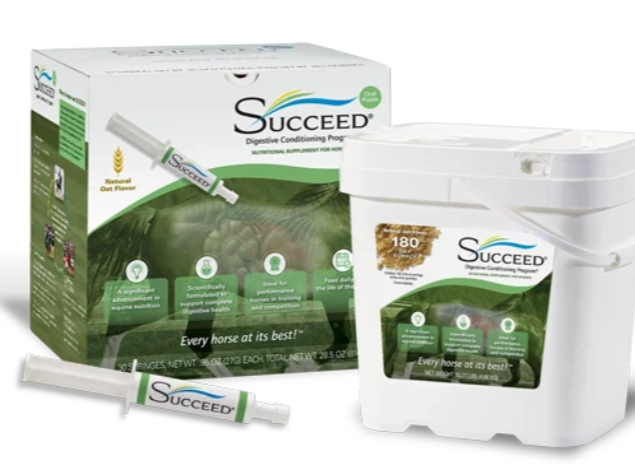
Understanding the Succeed Digestive Conditioning Program
Succeed Digestive Conditioning Program represents a science-backed approach to equine digestive health that goes beyond masking symptoms. This daily supplement has earned multiple U.S. patents for its formulation, including patents for treating and preventing both gastric and colonic ulcers in horses.[1]
Unlike medications that temporarily suppress acid production, Succeed works by supporting the structural integrity and function of the entire digestive tract. The product is available in two forms—oral paste syringes and top-dress granules—making it easy to incorporate into your horse’s daily routine regardless of their feeding preferences.
The supplement uses human food-grade or higher quality ingredients, and production follows Good Manufacturing Practice certification standards. This quality control ensures consistency and safety for long-term daily use in horses of all ages, from foals to senior horses.[2]
The Science Behind Succeed’s Ingredients
Each component of Succeed’s patented formula serves a specific purpose in supporting digestive health:
Oat Oil contains concentrated polar lipids, particularly galactolipids, that strengthen the tight junctions between epithelial cells lining the gut. These lipids also act as efficient nutrient delivery vehicles, transferring both fat-soluble and water-soluble molecules into tissues. The oat oil fraction includes powerful antioxidants (trienols and tocopherols) that neutralize free radicals before they damage surrounding tissue.[3]
Oat Flour provides high concentrations of beta-glucan soluble fiber that moderates digestion rate for more complete nutrient absorption. Beta-glucan creates a gel in the digestive tract that slows the transit of digesta, allowing starches to be digested earlier in the system and reducing negative effects of starch in the hindgut. This fiber also acts as a potent immune stimulator, inducing macrophages to mount immune responses and aid in healing damaged hindgut tissue.[3]
Irradiated Dried Yeast (Saccharomyces cerevisiae) supplies beta-glucans and mannan oligosaccharides that function as prebiotics. These compounds feed beneficial bacteria in the hindgut, support balanced microbiota, and block harmful components from escaping the gut lining. The yeast extracts promote healing while supporting immunity.[4]
L-Glutamine is an amino acid that provides fuel to immune cells in the gut lining and supports gut tissue integrity. Stress-induced deficits in glutamine can contribute to diarrhea, villous atrophy, mucosal ulceration, and increased intestinal permeability. Supplementation helps maintain the gut barrier during periods of stress.[5]
L-Threonine is an essential amino acid crucial for producing mucin, the key component of protective mucus that lubricates the GI tract lining. Threonine deficiency slows regeneration of the gut wall and depresses mucus production. This amino acid also plays an essential role in producing immunoglobulins and supporting wound healing.[3]
Landmark Research: Succeed vs. Omeprazole for Ulcer Management
One of the most significant studies on Succeed’s efficacy was published in the Journal of Equine Veterinary Science in 2016. This blinded randomized clinical trial compared Succeed to omeprazole—the gold standard medication for equine gastric ulcers—over a 90-day period.[6]
Researchers recruited 42 Thoroughbred horses in race training with squamous gastric ulceration graded at 2/4 or higher. Horses were randomly assigned to receive either full-dose omeprazole (4 mg/kg daily) or Succeed Digestive Conditioning Program (27g daily) for 90 days.
Study Results and Implications
The findings challenged conventional assumptions about ulcer management. At day 90, Succeed demonstrated non-inferiority to omeprazole for complete resolution of squamous ulceration. Both treatments significantly reduced ulcer scores at days 30 and 60.[6]
Interestingly, the study revealed that omeprazole’s efficacy appeared to decrease after 90 days of treatment, while Succeed maintained consistent benefits. The researchers noted this is particularly relevant given that ulcer treatments are often used for prolonged periods during racing seasons.
An important caveat: 10 of the 21 horses receiving omeprazole had at least one forced withdrawal from treatment due to racing rules, which likely reduced omeprazole’s measured efficacy at day 90. This highlights a practical advantage of Succeed—as a nutritional supplement rather than a medication, it doesn’t face the same competition restrictions.
Additional Research Supporting Digestive Benefits
A multi-location study examined Succeed’s effects on horses with existing gastric ulcers. After 44 days of supplementation (including a 14-day adaptation period), gastroscopy revealed improvements in both ulcer severity and number across different housing conditions and management styles.[7]
Research on foals demonstrated additional benefits. Foals receiving Succeed paste for 90 days—from 10 days before weaning through 80 days after weaning—showed significantly greater body weight gains at days 30, 60, and 90 compared to control animals. This suggests that supporting digestive health during stressful periods helps horses maintain condition and thrive.[8]
The Gut-Hoof Connection: Why Digestive Health Matters for Hooves
While Succeed’s digestive benefits are well-documented, the connection between gut health and hoof quality is equally important but often overlooked. Understanding this relationship reveals why a digestive supplement can have profound effects on hoof integrity.
How Nutrient Absorption Affects Hoof Growth
Your horse’s hooves depend entirely on nutrients absorbed through the gastrointestinal tract. The hoof wall is composed primarily of keratin—a structural protein that requires specific amino acids, vitamins, and minerals for proper formation. **When digestive function is compromised, nutrient absorption suffers, and hoof quality declines as a direct result.**[9]
Horses with chronic digestive issues frequently develop hoof problems despite receiving high-quality feed and supplements. The issue isn’t necessarily what goes into the feed bucket—it’s whether the horse can actually digest and absorb those nutrients. Poor gut health creates a cascade of problems: impaired nutrient uptake, reduced appetite due to discomfort, and inflammation that diverts resources away from hoof growth.
The Hindgut’s Role in Hoof Health
The hindgut makes up 60% of your horse’s digestive system and contains more microbial cells than there are tissue cells in the horse’s entire body. These billions of microbes don’t just ferment fiber for energy—they also synthesize essential B vitamins, including biotin.[10]
Biotin is one of the most scientifically proven nutrients for hoof health. This sulfur-rich B vitamin is vital for keratin production and plays a key role in tissue growth and maintenance. While horses naturally produce biotin through hindgut microbial fermentation, this production depends entirely on having a healthy, balanced population of beneficial bacteria.[10]
**When the hindgut microbiome is compromised by stress, high-grain diets, or intermittent feeding, biotin production decreases.** This reduction in biotin synthesis can contribute to weak, brittle hooves that crack easily and grow slowly.[11]
Beyond Biotin: Complete Nutritional Support
Hooves require more than just biotin. The amino acids lysine, methionine, and threonine are building blocks for hoof proteins. Minerals like zinc and copper are especially significant for hoof integrity—deficiencies in these minerals result in weak hooves susceptible to cracks and disease.[9]
Research has shown that horses with insufficient hoof horn strength have measurably less zinc in both hoof horn and plasma compared to horses with healthy hooves. Calcium also plays a crucial role in keratin attachment within the hoof structure.[12]
Here’s where Succeed’s comprehensive approach becomes relevant: by supporting optimal digestive function, the supplement helps horses absorb and utilize all these essential nutrients from their regular diet. The L-threonine in Succeed’s formula specifically supports mucin production for gut health while also serving as one of the amino acids directly needed for hoof protein synthesis.
| Nutrient | Role in Hoof Health | How Gut Health Affects It |
|---|---|---|
| Biotin | Keratin production, hoof wall integrity | Synthesized by hindgut microbes during fiber fermentation |
| Lysine | Essential amino acid for hoof proteins | Absorbed in small intestine; requires healthy gut function |
| Methionine | Sulfur-containing amino acid for hoof strength | Absorption depends on intestinal health and integrity |
| Threonine | Hoof protein structure and mucus production | Supplied by Succeed; supports both gut and hoof health |
| Zinc | Prevents defective keratin formation | Mineral absorption requires optimal digestive function |
| Copper | Hoof wall integrity and structure | Trace mineral uptake depends on gut health |
How Succeed Supports the Gut-Hoof Connection
Succeed’s formula addresses both sides of the gut-hoof equation: maintaining digestive health for optimal nutrient absorption while providing specific ingredients that support hoof tissue development.
Supporting Hindgut Microbiome Balance
The prebiotic components in Succeed—beta-glucans and mannan oligosaccharides from yeast extracts and oat flour—feed beneficial bacteria in the hindgut. This support helps maintain the diverse microbial population necessary for both fiber fermentation and biotin synthesis.[9]
Research has demonstrated that horses on high-grain diets or experiencing stress often have disrupted hindgut microbiomes. These disruptions can decrease biotin production and create inflammatory conditions that compromise nutrient absorption. **By promoting a balanced microbiota, Succeed helps restore the natural biotin factory in your horse’s hindgut.**[13]
Enhancing Nutrient Absorption
The polar lipids from oat oil strengthen the tight junctions between intestinal cells, improving the gut barrier function. This enhanced barrier prevents “leaky gut” conditions where bacterial toxins escape into the bloodstream, triggering systemic inflammation that can affect hoof health.[14]
Better barrier function also means more efficient nutrient absorption. The amino acids, vitamins, and minerals your horse needs for hoof growth can cross the intestinal lining more effectively when that lining is healthy and intact.
Direct Amino Acid Support
Succeed provides L-threonine and L-glutamine—two amino acids with dual roles. In the digestive tract, they support mucus production and tissue repair. For hoof health, threonine serves as one of the essential amino acids required for hoof protein synthesis. This direct supply ensures availability even when digestive function is compromised.[9]
Performance Horses and the Digestive-Hoof Challenge
Performance horses face unique challenges that stress both digestive and hoof health simultaneously. Intense training, frequent travel, irregular feeding schedules, and stall confinement all disrupt normal digestive function while placing additional demands on hoof integrity.
Stress-Induced Digestive Disruption
Competition horses experience elevated stress levels that trigger changes in gut physiology. Stress hormones affect both the digestive system and brain, creating a cascade of effects including altered gut motility, changed blood flow to intestinal tissues, and disrupted microbial populations.[15]
These stress-induced changes can manifest as behavioral issues (anxiety, unwillingness to work), performance problems (reduced stamina, poor recovery), and physical symptoms including poor hoof quality. Many trainers report that horses with digestive discomfort show reluctance to move forward freely—a direct connection between gut health and performance.
Travel and Feeding Disruptions
Horses that travel frequently to competitions face intermittent feeding patterns that don’t align with their natural grazing behavior. Extended periods without forage followed by large grain meals can trigger hindgut acidosis, disrupting beneficial bacteria populations and reducing biotin synthesis.
Performance horses often receive higher grain portions to meet energy demands, but this high-starch diet can overwhelm the small intestine’s digestive capacity. Undigested starch reaching the hindgut ferments rapidly, producing acids that kill beneficial microbes and damage the gut lining. This damage impairs nutrient absorption across the board—including the nutrients needed for strong hooves.[10]
Using Succeed for Hoof Health: What to Expect
If you’re considering Succeed primarily for hoof support, understanding the timeline and realistic outcomes helps set appropriate expectations.
Timeline for Visible Results
Most horses begin showing improvements in overall well-being within 30-60 days of starting Succeed. You might notice better appetite, more consistent manure, improved coat shine, and better attitude before you see changes in hoof quality.[2]
**Hoof improvements take longer because hooves grow slowly—approximately 1/4 to 3/8 inch per month.** Changes in hoof quality only appear in new growth, not in existing hoof wall. This means you’re looking at 6-9 months before significant improvements in hoof integrity become visible, similar to biotin supplementation timelines.
The key difference with Succeed is that you’re addressing the underlying cause—compromised digestive function—rather than just supplementing individual nutrients. This comprehensive approach may provide more consistent, lasting improvements compared to supplementing biotin alone.
What Improvements Look Like
Horse owners and farriers using Succeed report several observable changes in hoof quality:
- Stronger hoof wall that’s less prone to chipping and cracking
- Better white line integrity with improved connection between hoof wall and sole
- Improved hoof hardness while maintaining appropriate flexibility
- More consistent hoof growth with better quality horn throughout
- Reduced sensitivity in horses with previously tender soles
These improvements reflect better overall nutrition reaching hoof tissues, not just isolated nutrient supplementation.[3]
Complementary Hoof Care Practices
Succeed works best as part of a comprehensive hoof health program. Continue regular farrier visits every 4-8 weeks depending on your horse’s needs. Maintain consistent hoof hygiene with daily picking and periodic washing. Ensure your horse has appropriate turnout on varied terrain when possible to promote natural hoof function and circulation.
Feed a balanced base diet with quality forage as the foundation. Maximize fiber intake to support hindgut health—this feeds both the horse and the beneficial microbes producing biotin. If your horse is on restricted forage due to weight management or metabolic concerns, work with your veterinarian or equine nutritionist to ensure vitamin and mineral needs are still met.
| Feeding Instructions | Paste Form | Granules Form |
|---|---|---|
| Loading Dose (First Week) | 1 full syringe (27g) twice daily | 1 scoop (25-27g) twice daily |
| Maintenance Dose | 1 full syringe once daily | 1 scoop once daily |
| Best Fed | With or immediately before feed | Top-dressed on feed |
| Expected Timeline | 30-60 days for digestive improvements; 6-9 months for visible hoof changes | |
Succeed vs. Other Digestive Supplements for Metabolic Horses
For horses with metabolic concerns—including insulin resistance, EMS, or PPID—digestive health becomes even more critical. These horses often struggle with weight management, reduced exercise, and dietary restrictions that can all impact gut health and, consequently, hoof quality.
Considerations for Metabolic Horses
Succeed’s oat-based ingredients are naturally low in sugar and starch, making it appropriate for most metabolic horses. The beta-glucan fiber actually helps moderate sugar release from the digestive system, potentially beneficial for horses with insulin sensitivity.[3]
The supplement contains approximately 4 grams of starch and 1 gram of sugar per 27-gram serving. For context, this is significantly lower than many commercial feeds and treats. However, if your horse has severe insulin resistance or has experienced recent laminitis, discuss any new supplements with your veterinarian before starting.
Comparison with Other Options
Unlike ulcer medications like omeprazole that primarily address stomach acid, Succeed targets the entire GI tract including the hindgut. This comprehensive approach may be more appropriate for horses with multiple digestive concerns or those experiencing hindgut issues like colonic ulcers.
Compared to probiotic supplements, Succeed’s prebiotic approach feeds existing beneficial bacteria rather than attempting to introduce new bacterial strains. Research suggests prebiotics may be more effective for maintaining long-term gut health, as they support the horse’s natural microbial population.[16]
For horses already taking medications for other conditions, Succeed’s natural ingredients should not interfere with most treatments. The supplement can be safely used alongside omeprazole, steroids, or other medications. However, manufacturers recommend not using Succeed simultaneously with other digestive aids to avoid redundancy.
Research-Backed Benefits Beyond Hoof Health
While this article focuses on the hoof health connection, Succeed’s research demonstrates broader whole-horse benefits that stem from optimal digestive function.
Body Condition and Weight Management
Horses with compromised digestive health often struggle to maintain appropriate body condition. They may appear ribby despite adequate feed, or they may eat enthusiastically but fail to absorb nutrients effectively. Research on Succeed shows improvements in body condition that reflect enhanced nutrient absorption and utilization.[8]
Coat Quality and Appearance
A dull, rough coat often indicates nutritional deficiencies or poor nutrient absorption. Like hoof quality, coat health depends on the horse’s ability to extract and utilize nutrients from feed. Studies report improved coat shine and quality in horses receiving Succeed, another external indicator of better internal digestive function.[15]
Behavior and Trainability
The gut-brain axis means that digestive discomfort directly affects behavior and mental state. Horses with ulcers or other GI issues may be anxious, resistant to training, or explosive under saddle. Research on the gut-brain-microbiota connection shows that supporting digestive health can improve mood, reduce stress responses, and enhance trainability.[18]
Recovery and Performance
Optimal nutrient absorption supports faster recovery from exercise and better overall performance. The immune support provided by Succeed’s beta-glucans may also help horses handle the stress of training and competition more effectively.[17]
Conclusion
Research on Succeed Digestive Conditioning Program reveals a supplement backed by substantial science—from patents for ulcer treatment to clinical trials demonstrating non-inferiority to omeprazole. But perhaps the most important finding for many horse owners is the connection between digestive health and hoof quality.
By supporting the entire gastrointestinal tract, Succeed addresses the root cause of many hoof problems: compromised nutrient absorption and disrupted hindgut microbiome function. The supplement’s ingredients work synergistically to maintain gut integrity, support beneficial bacteria, and provide amino acids essential for both digestive and hoof health.
For horses with persistent hoof issues despite good farrier care and balanced nutrition, compromised digestive function may be the missing piece. While results take time—6-9 months for visible hoof improvements—addressing gut health provides whole-horse benefits that extend far beyond stronger hooves. Consider working with your veterinarian to evaluate whether your horse’s hoof challenges might stem from digestive dysfunction, and whether Succeed could be part of your long-term management strategy.
Succeed Digestive Conditioning Program FAQs
How long does it take to see hoof improvements when using Succeed Digestive Conditioning Program?
Most horses show overall health improvements within 30-60 days of using Succeed Digestive Conditioning Program, including better body condition and coat quality. However, visible hoof quality improvements typically require 6-9 months because hooves grow slowly (approximately 1/4 to 3/8 inch monthly) and Succeed only affects new hoof growth, not existing hoof wall.[19]
Can Succeed Digestive Conditioning Program help horses with metabolic issues like EMS or insulin resistance?
Yes, Succeed Digestive Conditioning Program is generally safe for metabolic horses. The supplement contains low levels of sugar (1g) and starch (4g) per 27g serving, and the beta-glucan fiber actually helps moderate sugar release from digestion. However, horses with severe insulin resistance or recent laminitis history should have any new supplements approved by their veterinarian before starting.[3]
How does Succeed compare to just supplementing biotin for hoof health?
While biotin supplementation provides one specific nutrient, Succeed Digestive Conditioning Program addresses the underlying cause of poor hoof quality by supporting digestive health and nutrient absorption. Succeed helps horses naturally produce biotin through healthy hindgut fermentation while also improving absorption of other hoof-essential nutrients like zinc, copper, and amino acids. This comprehensive approach may provide more consistent long-term results than biotin supplementation alone.[20]
Is Succeed safe to use alongside medications like omeprazole or NSAIDs?
Yes, Succeed Digestive Conditioning Program’s natural, nutritional ingredients should not conflict with most medications or supplements. Research shows it can be safely used alongside omeprazole, steroids, and other common medications. However, manufacturers recommend avoiding concurrent use with other digestive support products to prevent ingredient redundancy. Always inform your veterinarian about all supplements your horse receives.[5]
What’s the difference between Succeed paste and granules for hoof health benefits?
Both the paste and granule forms of Succeed Digestive Conditioning Program contain the same ingredients and provide identical benefits for digestive and hoof health. The choice between formats depends on your feeding preferences and horse’s acceptance. Paste syringes offer precise dosing and are convenient for travel, while granules are economical for long-term use and can be top-dressed on feed. Both require the same loading dose (twice daily for one week) followed by once-daily maintenance feeding.[2]
Succeed Digestive Conditioning Program Citations
- Freedom Health – Patent: Treating & Preventing Gastric & Colonic Ulcers in Horses
- SUCCEED Digestive Conditioning Program Horse Supplement – Official Product Information
- The Farrier’s Role in the Gut-Hoof Connection | SUCCEED Veterinary
- SUCCEED Digestive Conditioning Program – Feed Bank Analysis | Mad Barn
- Benefits of Using SUCCEED as a Complement to Medication
- Kerbyson et al., 2016 – A Comparison Between Omeprazole and a Dietary Supplement for the Management of Squamous Gastric Ulceration in Horses | Journal of Equine Veterinary Science
- Effects of a dietary supplement on gastric ulcer number and severity in exercising horses | PMC
- SUCCEED Digestive Conditioning Program – Veterinary Formula | Research Studies
- The Gut-Hoof Connection | SUCCEED Equine
- Hindgut Microbes: Secret to Equine Hoof Health? | Forma Hoof
- Should I Feed My Horse Biotin? Everything You Need to Know | Central Gippsland Equine Vet
- Essential Nutrition for Hoof Health | Dengie Horse Feeds
- 7 Science-Backed Benefits of Biotin for Horses | Mad Barn
- How your horses gut health and hoof health are connected | Equi-Strath
- How Gut Health Affects the Whole Horse | SUCCEED Equine
- Simple Solutions for Equine Gut Health | Nouvelle Research
- SUCCEED Veterinary Formula – Performance and Recovery Research
- Gut Health and Horse Behavior: What’s the Connection? | Stable Management
- What is The Impact of Nutrients on Hoof Health in Horses | Tribute Equine Nutrition
- Hoof Support: Biotin Supplementation in Horses | Kentucky Equine Research




Leave a Reply