
Meta Title: Senior EMS Horse Supplements: Age-Specific Protocol Guide Meta Description: Combat insulin resistance in aging horses. Senior EMS supplement protocol addresses absorption issues, muscle loss, PPID overlap. Expert dosing guide inside.
Key Takeaways
- Senior horses with EMS face declining digestive efficiency and nutrient absorption that requires adjusted supplement protocols beyond standard EMS management
- Magnesium and chromium supplementation becomes critical in horses over 15 as age-related metabolic changes compound insulin resistance
- Protein requirements remain elevated in senior EMS horses to combat muscle wasting, but must come from low-NSC sources like amino acid supplements
- Approximately 20% of horses 15 years and older develop PPID (Cushing’s disease), with 30% of PPID horses also showing insulin dysregulation
- Highly digestible supplement forms like liquids and powders work better than pellets for seniors with dental problems
Article Summary
Senior horses with Equine Metabolic Syndrome face nutritional challenges that standard EMS protocols don’t fully address. Age-related changes including decreased nutrient absorption, reduced muscle mass, and declining digestive efficiency require modified supplement strategies that account for both insulin resistance and aging. This guide explains which supplements senior EMS horses need, how to adjust dosing for older horses, and how to manage the overlap between EMS and PPID.
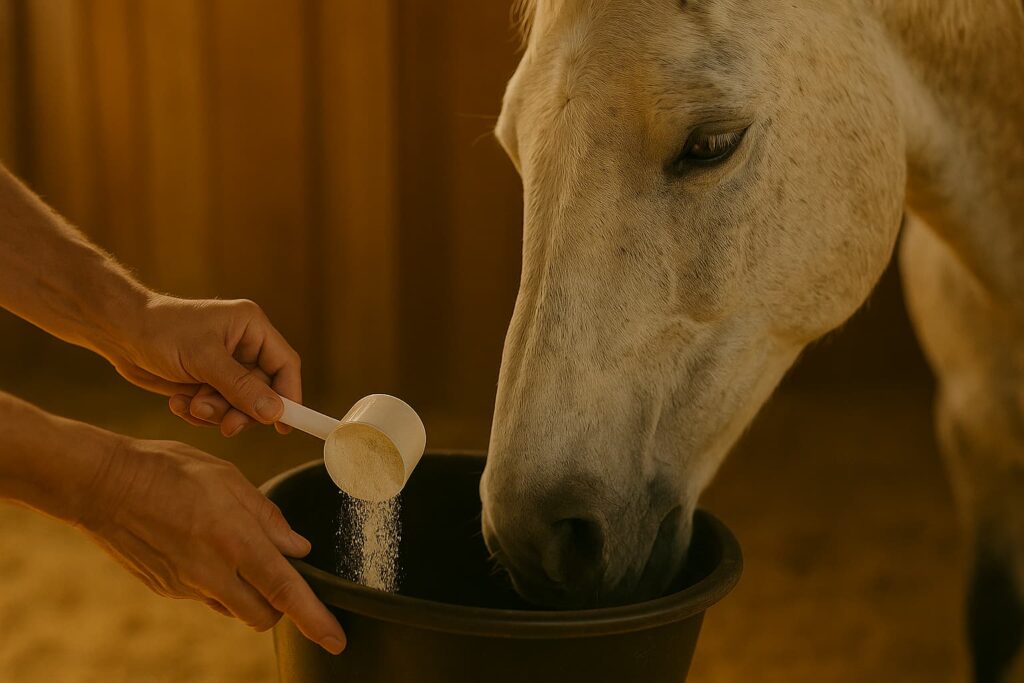
Understanding Senior EMS: A Different Challenge
Managing EMS in a senior horse requires a different approach than managing it in a younger animal. While fundamental principles remain the same—controlling nonstructural carbohydrates and supporting insulin sensitivity—the aging process introduces complications that demand careful attention.
As horses age past 15 years, their digestive systems become less efficient. Research confirms that senior horses experience decreased nutrient absorption, particularly of phosphorus, vitamins, and protein. The production of enzymes necessary for starch digestion may decrease, and the effectiveness of the intestinal lining declines with age, making it difficult for nutrients to reach the bloodstream.
Your senior EMS horse isn’t just dealing with insulin resistance. He’s also fighting natural metabolic slowdown that comes with age. Even horses without EMS develop some insulin resistance as they get older, and when you layer EMS on top of age-related changes, you’re managing a compounded problem.
Add dental problems, reduced muscle mass, and the possibility of concurrent PPID (Cushing’s disease), and your senior horse needs more than the basic low-sugar hay and chromium approach that works for younger EMS horses.
Age-Related Changes That Affect EMS Management
Decreased Digestive Efficiency
The equine digestive system loses efficiency with age. By the time a horse reaches his late teens, the ability to extract vitamins, minerals, and amino acids from feed has declined. This creates challenges for senior EMS horses on restricted diets.
You’re already limiting forage intake to control NSC levels, which reduces nutrient density. Then age reduces the ability to absorb what little nutrition is available. The result? Potential deficiencies in key nutrients like copper, zinc, vitamin E, and essential amino acids—all of which support metabolic health.
Senior horses may also produce less stomach acid and digestive enzymes than they did at age 10. This means protein digestion suffers, and poorly digested protein can cause gut discomfort or incomplete amino acid absorption.
Muscle Loss and Protein Metabolism
Senior horses naturally lose muscle mass through a process called sarcopenia. When combined with EMS, which often comes with obesity that hides muscle wasting underneath fat deposits, you end up with horses who look well-covered but are losing critical topline and hindquarter muscle.
The challenge is that protein needs remain high or even increase slightly with age, but traditional higher-protein feeds contain more NSC than an EMS horse can tolerate. You need protein sources that deliver essential amino acids without spiking blood sugar.
Mature horses at maintenance typically need 8-10% crude protein in their diet. Senior horses may benefit from 10-12% crude protein to maintain muscle mass, but for senior EMS horses, this protein must come from carefully selected low-NSC sources.
The PPID-EMS Overlap
PPID (Pituitary Pars Intermedia Dysfunction, also called Cushing’s disease) affects approximately 20% of horses 15 years and older. Research shows that about 30% of horses with PPID also show signs of insulin dysregulation, the hallmark of EMS. As horses with EMS age, they may develop concurrent PPID.
PPID causes increased cortisol production, which worsens insulin resistance. EMS causes chronic inflammation, which can stress the hypothalamic-pituitary axis. When a senior horse has both conditions, standard EMS management alone isn’t enough.
The supplement implications are significant. A horse with just EMS might do well with chromium and magnesium. A horse with PPID plus EMS needs chasteberry (Vitex agnus-castus) for pituitary support, plus potentially higher doses of antioxidants to combat oxidative stress from elevated cortisol.
Essential Supplements for Senior EMS Horses
| Supplement | Why Senior EMS Horses Need It | Recommended Form | Typical Daily Dose |
|---|---|---|---|
| Magnesium | Supports insulin function, often deficient in forage, helps with age-related nerve function | Magnesium oxide or chelated magnesium | 5,000-10,000 mg for 1,000 lb horse |
| Chromium | Enhances insulin sensitivity, becomes more critical with age-related insulin resistance | Chromium yeast or chromium propionate | 2-5 mg for 1,000 lb horse |
| Vitamin E | Powerful antioxidant, supports immune function, often deficient in seniors without pasture access | Natural (d-alpha-tocopherol) liquid or powder | 1,000-2,000 IU daily |
| Essential Amino Acids | Maintains muscle mass, supports topline, compensates for reduced protein digestion | Lysine, threonine, methionine in bioavailable forms | 10-20 g lysine daily |
| Omega-3 Fatty Acids | Reduces systemic inflammation, supports overall health in aging horses | Ground flaxseed | 2-4 oz ground flax daily |
| Copper & Zinc | Support insulin receptor function, hoof health, immune system | Balanced in 1:4 ratio (copper:zinc) | 100 mg copper, 400 mg zinc |
Magnesium: The Foundation for Senior EMS Horses
If you’re supplementing only one mineral for your senior EMS horse, make it magnesium. This essential mineral supports insulin receptor function, helps regulate glucose metabolism, and assists with nerve transmission—functions that become even more important with age.
Most hay is naturally low in magnesium, and if you’re soaking hay to reduce NSC content, you’re leaching out even more of this critical mineral. Senior horses may also absorb magnesium less efficiently than younger ones.
Look for magnesium oxide, which provides high elemental magnesium concentration, or chelated forms like magnesium glycinate if your horse has known absorption issues. For a 1,000-pound horse, typical supplementation ranges from 5,000-10,000 mg daily.
Chromium: Enhanced Insulin Sensitivity for Aging Metabolism
Chromium supplementation has research supporting its use in horses with insulin resistance. Studies show that supplementing equine diets with chromium propionate can improve insulin sensitivity and lower both glucose and insulin levels in the bloodstream after meals.
Chromium works by enhancing the insulin signaling pathway, making the insulin your horse produces more effective at moving glucose into cells. Research on horses fed 2-4 mg of chromium propionate daily showed improved insulin sensitivity compared to control horses.
For senior EMS horses, chromium yeast or chromium propionate are preferred forms because they’re highly bioavailable. Start with 2 mg daily for a 1,000-pound horse and work up to 5 mg if needed, based on insulin testing results.
Vitamin E: Critical Antioxidant Protection
Senior horses need more vitamin E than younger horses, yet they’re often getting less. The richest source of vitamin E is fresh pasture grass, and most senior EMS horses have severely restricted or no pasture access to control sugar intake.
Vitamin E is a powerful antioxidant that protects cell membranes from oxidative damage. In senior horses with EMS, oxidative stress is elevated due to both chronic inflammation and aging itself. The National Research Council recommends horses consume 1-2 IU of vitamin E per kilogram of body weight daily, which equals 500-1,000 IU for a 1,000-pound horse at maintenance.
Natural vitamin E (d-alpha-tocopherol) is absorbed more efficiently than synthetic forms (dl-alpha-tocopherol). For senior EMS horses, aim for 1,000-2,000 IU daily. Water-soluble forms of vitamin E are worth considering for seniors with any history of liver dysfunction, as they don’t require bile salts for absorption.
Amino Acids: Fighting Age-Related Muscle Loss
Senior EMS horses need adequate protein to maintain muscle mass, but typical higher-protein feeds contain too much NSC. The solution is supplementing specific essential amino acids that target muscle protein synthesis without adding unnecessary carbohydrates.
Lysine is the most limiting amino acid in equine diets. Senior horses need approximately 4% of their dietary protein to come from lysine. If your senior EMS horse is eating a restricted diet of primarily hay, he’s probably not getting enough.
Threonine and methionine are also critical. Threonine supports the immune system, which naturally weakens with age, while methionine plays a role in hoof quality—important for EMS horses who may have compromised hoof integrity from past laminitis episodes.
Look for amino acid supplements specifically formulated for horses. Products designed for equine use provide balanced ratios of essential amino acids without added NSC.
Omega-3 Fatty Acids: Managing Inflammation
Chronic, low-grade inflammation is a hallmark of both EMS and aging. When combined, you have a horse whose entire system is under constant inflammatory stress. Omega-3 fatty acids help modulate this inflammation and support overall metabolic health.
Ground flaxseed is the safest omega-3 source for senior EMS horses because it’s low in NSC and provides beneficial omega-3 fatty acids. Feed 2-4 ounces of freshly ground flaxseed daily. Grinding it fresh or storing ground flax in the freezer is important because the oils oxidize quickly once exposed to air.
While fish oil provides direct EPA and DHA, use caution when adding any significant fat source to an insulin-resistant horse’s diet. Work with your veterinarian before introducing fats beyond flaxseed.
Supplement Forms Matter More for Senior Horses
The form supplements come in directly affects how much your senior horse can absorb and use. This becomes critical when dealing with reduced digestive efficiency.
Powder vs. Pellets
Powders are generally better absorbed than pellets in senior horses, especially those with dental issues. Pellets need to be thoroughly chewed to break down, and a senior horse with missing teeth or worn molars might swallow large pieces whole, which pass through the digestive system without fully releasing nutrients.
If your senior horse refuses powders mixed into feed, look for small, soft pellets rather than large, hard ones. Consider soaking any pelleted supplements for 10-15 minutes before feeding to help break them down.
Liquid Supplements
Liquid supplements offer high bioavailability because they’re already in a form the digestive system can immediately use. For senior horses with compromised gut function, liquids can make a significant difference in how much of the supplement actually gets into the bloodstream.
Liquid vitamin E, liquid chromium, and liquid amino acid supplements are available. The downside is they’re typically more expensive and have shorter shelf lives than powders or pellets. For a senior EMS horse not responding well to other forms, they may be worth the investment.
Chelated Minerals
Chelated minerals are bound to amino acids or other organic compounds, helping them pass through the intestinal wall more easily. For senior horses whose mineral absorption is compromised, chelated forms of copper, zinc, and magnesium can provide better results than inorganic forms.
Chelated minerals cost more, but when you’re dealing with a horse who needs every milligram of supplementation to work effectively, paying extra for better absorption makes sense.
Building a Senior EMS Supplement Protocol
| Horse Condition | Core Supplements | Additional Considerations | What to Monitor |
|---|---|---|---|
| Senior EMS Only (No PPID, good dental health) | • Magnesium 5,000-8,000 mg • Chromium 2-5 mg • Vitamin E 1,000-2,000 IU • Balanced vitamin/mineral ration balancer | • Essential amino acids if topline is poor • Omega-3s from ground flax | • Body condition score monthly • Insulin testing every 3-6 months |
| Senior EMS + PPID | • All of the above PLUS • Chasteberry 5-10 g daily • Higher vitamin E (2,000-3,000 IU) • Enhanced antioxidants | • May need pergolide medication (vet prescribed) | • ACTH testing twice yearly • Watch for muscle wasting • Monitor drinking/urination |
| Senior EMS + Dental Issues | • Switch all supplements to liquid or powder forms • May need increased amino acids due to reduced feed intake | • Soak hay cubes or pellets • Consider complete senior feed if NSC is low enough | • Body weight weekly • Manure consistency • Dental exams every 6 months |
| Senior EMS + Prior Laminitis | • All standard EMS supplements PLUS • Biotin 20-30 mg • Methionine for hoof support | • Regular farrier visits | • Digital pulse checks • Hoof growth rate • Comfort level on different surfaces |
Starting a New Supplement Protocol
Don’t introduce every supplement at once. Senior horses, especially those with metabolic issues, can be sensitive to sudden changes. Start with a basic vitamin/mineral balancer and magnesium, then add chromium after two weeks, followed by vitamin E and amino acids in subsequent weeks.
This staged approach lets you identify if any particular supplement causes digestive upset or other issues. It also prevents overwhelming your horse’s system with too many new compounds at once.
Track everything. Keep a journal noting when you start each supplement, at what dose, and any changes you observe—positive or negative. Include notes on energy level, appetite, body condition, hoof quality, and attitude.
Adjusting for Individual Response
Not every senior EMS horse responds the same way to supplements. Some horses show improvement in insulin sensitivity with chromium supplementation; others show minimal change. Some seniors handle higher magnesium doses without issue; others develop loose manure and need to back off.
Plan to test insulin and glucose levels 6-8 weeks after implementing your supplement protocol, then again at three months. This shows whether supplements are actually improving metabolic function or if adjustments are needed.
If insulin levels aren’t improving after three months of consistent supplementation, consider whether absorption is the issue. This might be the time to switch to liquid forms or have your veterinarian evaluate gut health.
Managing Concurrent PPID and EMS
When your senior horse has both PPID (Cushing’s disease) and EMS, you’re dealing with a metabolic perfect storm. PPID causes elevated cortisol, which directly worsens insulin resistance. EMS causes inflammation and oxidative stress, which can further damage the pituitary gland.
Many supplements support both conditions simultaneously. Chasteberry (Vitex agnus-castus) helps regulate pituitary function in PPID horses. Antioxidants like vitamin E and selenium combat oxidative stress caused by both conditions.
However, horses with both conditions often need pergolide medication (prescribed by a veterinarian) to control PPID symptoms. Supplements alone rarely manage moderate to severe PPID effectively. Think of supplements as supporting the medication, not replacing it.
Signs Your Senior Horse May Have Both Conditions
- Long, curly coat that doesn’t shed normally
- Muscle wasting along the topline and hindquarters despite adequate feed
- Increased drinking and urination
- Abnormal fat deposits, particularly the crest and tail head
- Chronic or recurrent laminitis
- Lethargy or decreased performance
- Poor wound healing
If your senior EMS horse shows several of these signs, talk to your veterinarian about ACTH testing to check for PPID. Fall testing (September through November) is most reliable, as ACTH levels naturally rise during this season and abnormalities are easier to detect.
Digestive Support for Compromised Gut Function
Senior horses often develop reduced digestive efficiency. This affects how well they can utilize any supplements you give them, making digestive support supplements particularly valuable.
Probiotics and Prebiotics
The equine hindgut houses trillions of microorganisms that ferment fiber and produce essential nutrients. As horses age, this microbial population can become less diverse and less efficient. Adding targeted probiotics can help maintain a healthy gut environment.
Look for equine-specific probiotic strains, not general livestock or human probiotics. Saccharomyces cerevisiae (a beneficial yeast) and Lactobacillus species formulated for horses have research supporting their use. Prebiotics like fructooligosaccharides (FOS) feed beneficial bacteria and can enhance probiotic effectiveness.
Psyllium for Gut Health
Psyllium husk serves dual purposes for senior EMS horses. It helps prevent sand accumulation in the gut—particularly important for horses on dry lots or those who eat hay off sandy ground. Psyllium also acts as a prebiotic, feeding beneficial gut bacteria and supporting digestive health.
Feed psyllium for one week each month, not continuously. This on-off cycle prevents the gut from adapting to the psyllium in ways that reduce its effectiveness.
Monitoring Success and Making Adjustments
Supplements don’t work overnight, especially in metabolic conditions. Plan to stay consistent with your protocol for at least 8-12 weeks before evaluating effectiveness. Senior horses respond more slowly to dietary changes than younger ones.
What to Track
Keep detailed records including:
- Body weight (weigh tape weekly or scale monthly)
- Body condition score (1-9 scale, evaluate monthly)
- Topline muscle assessment (photos from the same angle monthly)
- Hoof quality (growth rate, strength, evidence of laminitic rings)
- Energy level and attitude
- Any signs of laminitis (digital pulse, reluctance to move, heat in hooves)
- Feed intake (is the horse eating all supplements offered?)
When to Test Insulin and Glucose
Plan on testing insulin and glucose:
- Before starting the supplement protocol (baseline)
- 6-8 weeks after implementing protocol
- 3 months after starting
- Every 6 months thereafter if stable
- Immediately if you see signs of laminitis or metabolic crisis
For senior horses with concurrent PPID, also test ACTH levels twice yearly (ideally in fall and spring) to monitor Cushing’s disease progression and medication effectiveness if applicable.
Signs Your Protocol Is Working
Within 2-3 months of a well-designed supplement protocol, you should notice:
- Improved muscle tone, particularly along the topline
- Better hoof quality (stronger growth, fewer cracks)
- Reduced crest size in overweight horses
- Improved energy and willingness to move
- Stable or improving insulin/glucose values
- No laminitis episodes
If you’re not seeing any improvement after 12 weeks, it’s time to reassess. Either the supplements aren’t being absorbed (consider switching forms), the dosing isn’t adequate (discuss with your vet), or there’s an underlying issue that needs medical attention rather than just nutritional support.
Special Considerations for Dental Issues
Dental problems are nearly universal in senior horses, and they significantly impact how you deliver supplements. A horse with missing molars or sharp points that cause pain when chewing will avoid properly masticating his feed, which means he’s not breaking down supplements mixed into that feed.
Adapting Supplement Delivery
If your senior EMS horse has dental issues:
Soak everything. Mix supplements into soaked hay cubes, soaked hay pellets, or soaked beet pulp (molasses-free). This ensures he doesn’t need to chew hard pellets or try to eat dry powder.
Consider liquid supplements for major nutrients. Liquid vitamin E, liquid B-complex vitamins, and liquid minerals bypass the need for chewing entirely and may be better absorbed.
Use smaller, more frequent meals rather than one or two large ones. A horse with dental pain often eats better when given smaller portions multiple times daily.
Work with your equine dentist every 6 months at minimum. Regular floating, wave mouth corrections, and removal of loose or broken teeth can dramatically improve your horse’s ability to eat and benefit from his supplements.
Cost-Effective Supplement Strategies
Managing a senior EMS horse isn’t cheap, and supplement costs can quickly spiral. Here’s how to prioritize spending:
Must-Have Supplements
- Balanced vitamin/mineral supplement – The foundation of the protocol
- Magnesium – Relatively inexpensive and critically important
- Chromium – Small amounts needed, good return on investment
These three supplements should be non-negotiable for every senior EMS horse.
Important But Potentially Negotiable
- Vitamin E – Critical if no pasture access, but can be reduced if horse gets even limited grazing
- Amino acids – Important for muscle maintenance, but if horse has access to good-quality hay and isn’t showing severe muscle loss, you might maintain vs. supplement
- Omega-3s – Beneficial but not immediately critical for metabolic control
Buy in bulk when possible. Large containers or bags of single-ingredient supplements (magnesium oxide, chromium yeast) are far more economical than pre-mixed formulas.
Conclusion
Managing a senior horse with EMS requires more than just following standard protocols designed for younger horses. The aging process introduces unique challenges—decreased nutrient absorption, reduced muscle mass, potential concurrent PPID, and declining digestive efficiency—that demand adjusted supplement strategies.
Your senior EMS horse can thrive with the right combination of low-NSC forage, targeted supplementation, and careful monitoring. Focus on the essentials: magnesium and chromium for insulin sensitivity, vitamin E for antioxidant protection, and quality protein to maintain muscle mass. Choose supplement forms that accommodate dental issues and reduced digestive efficiency.
Most importantly, work closely with your veterinarian or equine nutritionist to develop a protocol tailored to your individual horse’s needs. Test insulin levels regularly, track changes carefully, and be willing to adjust your approach as your horse ages and his needs evolve.
Take action now: Schedule insulin testing if you haven’t tested within the past 6 months, have your equine dentist evaluate your horse’s teeth, and review your current supplement protocol against the guidelines in this article. Your senior horse with EMS can maintain quality of life well into his twenties with the right nutritional support.
Senior EMS Horse Supplements FAQs

Can senior EMS horses ever go back to pasture grazing?
Most senior horses with EMS need permanent pasture restriction, but controlled grazing with a muzzle during low-sugar times (late evening, overnight) may be possible once insulin levels stabilize. Senior horses with both EMS and age-related insulin resistance are more sensitive to sugar spikes than younger EMS horses. Always test insulin levels before reintroducing any pasture access, and never allow grazing during spring grass flush or after frost.
Do senior EMS horse supplements interact with pergolide medication for Cushing’s?
Most supplements used for EMS management don’t interact negatively with pergolide (Prascend). Antioxidants like vitamin E and selenium may enhance pergolide’s effectiveness by reducing oxidative stress. Always inform your veterinarian about all supplements your horse receives. Chasteberry should be used cautiously alongside pergolide, as both affect pituitary function, though some veterinarians do recommend using them together.
How long does it take for senior EMS horse supplements to show results?
Unlike younger horses who may show metabolic improvements within 4-6 weeks, senior horses typically need 8-12 weeks of consistent supplementation before you see measurable changes in insulin levels, body condition, or muscle mass. Decreased absorption and slower metabolism mean patience is essential. Plan to give any new supplement protocol a full three months before deciding whether it’s effective.
What’s the difference between senior horse supplements and senior EMS horse supplements?
Standard senior supplements often contain molasses, added sugars, or higher starch levels to increase palatability and calories—all problematic for EMS horses. Senior EMS supplements must be strictly NSC-controlled (typically under 10% combined starch and sugar) while still providing the increased protein, vitamins, and minerals that aging horses need. Always check guaranteed analysis before feeding any senior product to an EMS horse.
Should I give senior EMS horse supplements if my horse is already on medication?
Yes, supplements and medications serve different purposes. Pergolide treats PPID by regulating pituitary function, but it doesn’t provide the vitamins, minerals, and amino acids that senior horses with restricted diets need. Metformin (sometimes prescribed for severe insulin resistance) helps with glucose metabolism but doesn’t supply nutritional support. Think of medication as treating the disease, while supplements address nutritional deficiencies and support overall metabolic function. Always coordinate supplement and medication protocols with your veterinarian.
Senior EMS Horse Supplements Citations
- Kentucky Equine Research – Taking Care of the Senior Horse
- University of Florida – Caring for the Older Horse: Common Problems and Solutions
- Iowa State University Extension – Feeding the Senior Horse
- The Horse – EMS and PPID: What’s the Same, What’s the Difference?
- The Horse – Managing and Monitoring Senior Horses With PPID
- UC Davis Center for Equine Health – Pituitary Pars Intermedia Dysfunction (PPID)
- National Center for Biotechnology Information – Chromium propionate increases insulin sensitivity in horses
- Kentucky Equine Research – Chromium Supplementation and Insulin Dynamics in Horses
- UC Davis School of Veterinary Medicine – Vitamin E In Horses
- The Horse – How to Effectively Supplement Horses With Vitamin E
- Penn State Extension – Protein in the Horse Diet
- Iowa State University Extension – Protein and the Horse’s Diet
- American Association of Equine Practitioners – Equine Metabolic Syndrome
- HoofRoom – PPID Senior Horse Metabolic Issues Dietary Management
- HoofRoom – Best Supplements for Insulin Resistant Horses
- HoofRoom – Feeding the Senior Horse




Leave a Reply