
Key Takeaways
- Start Formula 707 8-12 weeks before spring grass growth to build hoof resilience
- Spring grass contains dangerously high NSC levels that trigger laminitis in metabolic horses
- Combine hoof supplementation with grazing restrictions and monitoring for best results
- Formula 707 provides 14.6 mg biotin per serving to strengthen hoof structure from within
- Results become visible at the coronet band within 8-12 weeks of consistent use
Spring grass surges create the perfect storm for laminitis in horses with metabolic conditions. Starting Formula 707 Hoof Health before spring arrives gives your horse’s hooves the structural strength they need to weather the season’s most dangerous period.
Why Spring Is the Most Dangerous Season for Horse Hooves
Spring brings more than just warmer weather and longer days. Cool-season grasses undergo rapid growth during March through May, accumulating dangerous levels of non-structural carbohydrates (NSCs) that can trigger what veterinarians call “grass founder.”[1]
Spring grass contains higher levels of sugars, starches, and fructans than grass that grows later in the year. When nighttime temperatures stay cool (below 40°F) while daytime temperatures climb above 60°F, grasses store these carbohydrates instead of using them for overnight growth.[2] This creates the highest-risk conditions for pasture-associated laminitis.[3]
Dr. Scott Austin, a boarded specialist in equine internal medicine at the University of Illinois Veterinary Teaching Hospital, warns: “Exposure of an insulin-resistant horse to a high-carbohydrate diet, as we see with lush pastures, will cause a great increase in insulin levels in the horse. High insulin levels can affect blood flow to the laminae and cause laminitis.”[4]
How Spring Grass Damages Horse Hooves
When horses consume lush spring grass, the excess NSCs ferment in their gastrointestinal tracts, disrupting the balance of gut bacteria. This microbial shift has been observed within just 4 days of transitioning to fresh pasture.[5] For horses with insulin resistance or Equine Metabolic Syndrome, the problem compounds as their bodies respond to dietary sugars with excessive insulin production, directly affecting blood flow to the sensitive laminae in the hooves.[6]
The 8-12 Week Hoof Preparation Window
Formula 707 Hoof Health works by supporting the growth of new, stronger hoof horn from the coronet band. Because hooves grow slowly, timing your supplementation is critical for spring protection.
Why Start Before Spring Arrives
Biotin and other hoof-strengthening nutrients only affect new hoof growth, not existing hoof tissue.[7] Research shows that it takes approximately 8 to 12 months for new hoof horn to grow completely from the coronet band to the sole.[8] However, initial improvements become visible much earlier.
New hoof growth at the coronet band begins showing changes within 8-12 weeks of starting biotin supplementation.[9] By starting Formula 707 in January or early February, you give your horse’s hooves time to develop stronger structure before spring grass becomes problematic in March and April.
| Timeline | What to Expect |
|---|---|
| Weeks 1-4 | Internal changes begin; no visible hoof changes yet |
| Weeks 8-12 | New growth visible at coronet band; shinier coat |
| Weeks 12-24 | Stronger hoof growth halfway down hoof wall |
| Months 6-9 | Majority of hoof wall renewed with healthier tissue |
| Months 9-12 | Complete hoof transformation; optimal resilience |
What Makes Formula 707 Effective for Spring Prevention
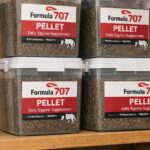
Formula 707 Hoof Health contains 14.6 mg of biotin per 1-ounce serving, placing it within the recommended 10-20 mg range for average-sized horses.[10] The supplement also includes essential amino acids (DL-methionine and L-lysine) and bioavailable minerals (zinc methionine complex, proteinated manganese and copper) that work together to support keratin production.[11]
Biotin’s Role in Hoof Strengthening
Biotin serves as an essential cofactor for enzymes that produce keratin, the structural protein in hooves, and also supports production of intercellular fatty cement that holds hoof tissue together.[8] Multiple studies have demonstrated that daily supplementation of 15-20 mg biotin improves hoof quality after several months of consistent use.[12]
In one comprehensive study of horses with poor hoof quality, daily supplementation of 20 mg biotin for nine months improved hoof wall integrity significantly.[7] Another study reported increased hoof wall growth rate and hoof hardness when 15 mg of biotin was supplemented for 10 months.[12]
Low NSC Content for Metabolic Horses
Formula 707 Hoof Health is formulated with low non-structural carbohydrate content, making it suitable for insulin-resistant horses. The product contains minimal amounts of dextrose and molasses for palatability, with a small 1-ounce serving size that limits sugar intake.[10]
Spring Management Protocol with Formula 707
Supplementation works best when combined with strategic spring management practices. Here’s how to integrate Formula 707 into your spring laminitis prevention plan:
January-February: Begin Supplementation
Start feeding Formula 707 at least 8-12 weeks before spring grass growth begins in your region. Feed 1 scoop (1 oz) daily as a top dressing on feed for the average 1,100-pound horse.[10] Horses already on Formula 707 should continue without interruption through spring.
March-April: Monitor and Restrict
As grass begins growing, implement turnout restrictions even while continuing Formula 707. Horses at risk for laminitis should have limited pasture access during peak NSC periods.
NSC levels in cool-season grasses are lowest in early morning and highest through afternoon and evening.[6] Schedule turnout for late night (after 10:00 PM) or early morning (before 10:00 AM) when NSC content is lower.[13]
Grazing Muzzle Coordination
Studies show grazing muzzles reduce grass intake by approximately 50%.[14] For horses with previous laminitis episodes or known insulin resistance, combine Formula 707 supplementation with grazing muzzle use during spring turnout. This limits sugar intake while allowing social interaction and exercise.
Daily Hoof Monitoring
Check your horse’s hooves daily for early warning signs:[15]
- Warmth in the hoof wall
- Increased digital pulse
- Reluctance to move or turn
- Shifting weight off affected feet
- Standing with front feet extended
If you notice any of these signs, immediately remove your horse from pasture and contact your veterinarian.
Spring Turnout Transition Guidelines
Even with Formula 707 supporting hoof strength, proper pasture introduction remains essential for horses coming off winter dry lot or limited turnout.
| Horse Category | Transition Schedule |
|---|---|
| Healthy horses without laminitis history | Start with 30 minutes daily, increase by 30 minutes every few days until 4 hours reached[16] |
| Horses with previous laminitis | Start with 15 minutes daily, increase by 15 minutes every week until 4 hours reached[17] |
| Insulin-resistant or EMS horses | Consult veterinarian; may require dry lot with low-NSC hay only[18] |
| Obese horses or easy keepers | Limit to 1-3 hours daily with grazing muzzle; maintain weight loss program[19] |
Maximizing Formula 707 Results Through Spring
Getting the most from Formula 707 during high-risk spring months requires consistency and complementary management practices.
Consistent Daily Feeding
Feed Formula 707 at the same time each day without skipping. Research shows that intermittent biotin feeding does not cause hoof rings, but stopping supplementation altogether causes hooves to regress to their former state.[7] Consistency matters more than high dosing for achieving lasting hoof improvements.[20]
Coordinate with Farrier Schedule
Maintain regular farrier visits throughout spring. Your farrier can help monitor new hoof growth quality and identify early signs of stress or separation. Schedule trims every 6-8 weeks to keep hooves balanced as stronger new growth develops.
Pair with Proper Nutrition
While Formula 707 provides targeted hoof nutrients, overall diet quality affects results. Ensure your horse receives adequate protein (90% of hoof wall is protein), omega-3 fatty acids, and balanced minerals from forage and base feed.[21] Horses on restricted diets may benefit from a vitamin and mineral supplement alongside Formula 707.
When to Adjust Your Spring Strategy
Not all horses respond identically to spring management plans. Watch for these situations that may require strategy adjustments:
Horses Already Showing Hoof Damage
If your horse enters spring with existing cracks, chips, or weak hoof walls, Formula 707 will support new growth but cannot repair already-damaged tissue.[22] These horses need more conservative turnout restrictions while waiting for healthier hoof to grow down from the coronet band.
Multiple Metabolic Risk Factors
Horses with both insulin resistance and Cushing’s disease (PPID) face compounded spring risks. These horses may need to avoid spring pasture entirely, staying in dry lot with carefully selected low-NSC hay while continuing Formula 707 for long-term hoof support.[23]
First Spring After Laminitis Episode
Horses recovering from previous laminitis episodes should not return to unrestricted pasture access. Dr. Austin advises that these horses “should not be out on pasture or should only go out to mature pasture after consuming their morning hay ration and should wear a muzzle.”[23] Continue Formula 707 to support hoof repair while maintaining strict spring turnout protocols.
Conclusion
Spring grass surges don’t have to mean laminitis risk for your horse. By starting Formula 707 Hoof Health 8-12 weeks before spring arrives, you build the hoof strength needed to withstand seasonal NSC spikes. Combined with smart turnout management, grazing restrictions, and daily monitoring, you can keep your metabolic horse sound through spring’s most dangerous period.
Remember that hoof supplementation is a long-term investment, not a quick fix. Stay consistent with daily Formula 707 feeding, work closely with your farrier and veterinarian, and adjust your spring management strategy based on your individual horse’s needs and response. For detailed product information and usage guidelines, see our complete Formula 707 Hoof Health review.
Formula 707 Hoof Health FAQs
Can I start Formula 707 Hoof Health in spring if I didn’t begin in winter?
Yes, you can start Formula 707 anytime, though results take 8-12 weeks to become visible at the coronet band. Starting mid-spring means your horse won’t have maximum hoof strength for that season’s grass surge, but the supplement will support healthier growth for subsequent seasons. Combine late-start supplementation with extra-vigilant spring management including grazing restrictions and muzzle use.
How long does Formula 707 Hoof Health take to work for spring laminitis prevention?
Formula 707 begins affecting new hoof growth immediately, but visible changes at the coronet band take 8-12 weeks. For optimal spring protection, start supplementation in January or February, giving new stronger hoof tissue time to develop before March-April grass surges. Complete hoof wall renewal takes 9-12 months of consistent daily feeding.
Is Formula 707 Hoof Health safe for insulin-resistant horses during spring?
Yes, Formula 707 Hoof Health is formulated with low NSC content and contains minimal amounts of dextrose and molasses for palatability in a small 1-ounce serving. However, always consult your veterinarian before adding any supplement to an insulin-resistant horse’s diet, especially during high-risk spring months when overall carbohydrate management is critical.
Should I stop Formula 707 Hoof Health after spring grass season ends?
No, continue Formula 707 year-round for maintained hoof quality. Research shows that stopping biotin supplementation causes hooves to regress toward their former condition. Once you achieve improved hoof strength and integrity through consistent Formula 707 use, ongoing supplementation is necessary to maintain those results through all seasons.
Can Formula 707 Hoof Health prevent laminitis by itself?
No, Formula 707 supports hoof structure and strength but does not address the underlying metabolic or dietary causes of laminitis. Hoof supplementation must be combined with proper spring management including grazing restrictions, weight control, turnout timing, and veterinary care for horses with insulin resistance or other metabolic conditions. Formula 707 builds hoof resilience; management prevents laminitis triggers.
Formula 707 Hoof Health Citations
- North Carolina Cooperative Extension – Spring Grazing and Laminitis Risk
- Horse Health Programme – The Link Between Spring Grass and Laminitis
- Mad Barn – Pasture-Associated Laminitis: How to Keep Your Horse Safe
- University of Illinois Veterinary Medicine – Spring Grass and Laminitis in Horses
- Mad Barn – Transitioning Your Horses to Grazing Pasture in the Spring
- My New Horse – Spring Grazing: The Risks of Fresh Grass for Horses
- Kentucky Equine Research – Biotin Basics
- Mad Barn – 7 Science-Backed Benefits of Biotin for Horses
- Kentucky Equine Research – Hoof Support: Biotin Supplementation in Horses
- Formula 707 – Hoof Health Pellets Official Product Page
- PBS Animal Health – Formula 707 Hoof Health Pellets
- PubMed – Effect of Dietary Biotin Supplement on Equine Hoof Horn Growth Rate and Hardness
- Standlee Forage – How to Avoid High NSC Intake for Horses in the Spring
- Equine Challenge Supplements – Sugar Levels in Spring and Fall Pasture Grasses
- Mad Barn – Pasture-Associated Laminitis Signs and Monitoring
- Tribute Equine Nutrition – Safe Spring Pasture Transitioning for Horses
- Equine Challenge Supplements – Slow Introduction to Pasture
- Penn State Extension – Transitioning Horses to Spring Grazing
- Standlee Forage – Spring Grazing Strategies for At-Risk Horses
- Med Vet Pharmaceuticals – Biotin for Horses: Benefits, Dosage & Best Supplements
- American Farriers Journal – Hoof Quality: Is Biotin Enough?
- Kentucky Performance Products – Biotin Basics
- University of Illinois Veterinary Medicine – Spring Grass and Laminitis Prevention






Leave a Reply