
Key Takeaways
- Pelleted feeds are strongly recommended for horses with metabolic conditions due to consistently lower NSC content and controlled glucose responses [1][2][3]
- NSC levels must stay below 10-12% regardless of feed form – this is the critical safety threshold for EMS and insulin-resistant horses [4][2][5][6][7]
- Avoid grain-heavy textured feeds containing oats, corn, and molasses that can trigger dangerous insulin spikes [8][9][10][11][12]
- Pelleted feeds prevent selective eating ensuring balanced nutrition in every bite, while textured feeds risk nutrient deficiencies from sorting behavior [9]
- Always verify individual feed labels as some low-NSC textured options exist, but require careful evaluation and monitoring [8][10][12]
Article Summary
For horses with metabolic conditions like EMS, insulin resistance, and Cushing’s disease, pelleted feeds are generally preferred over textured feeds due to lower sugar and starch content, greater nutritional consistency, and more precise nutrient formulation that helps maintain controlled blood glucose and insulin levels [1][2][3].
| Feed Type | Best For | NSC Range | Key Benefit |
|---|---|---|---|
| Low-NSC Pelleted | EMS, IR, PPID horses | Under 10-12% | Consistent nutrition, controlled glucose response |
| Low-NSC Textured | Metabolic horses needing palatability | Under 10-12% | Higher palatability, requires careful monitoring |
| Traditional Textured | Healthy horses only | 15-25%+ | High energy, NOT suitable for metabolic horses |
Understanding Pelleted Feeds for Metabolic Horses
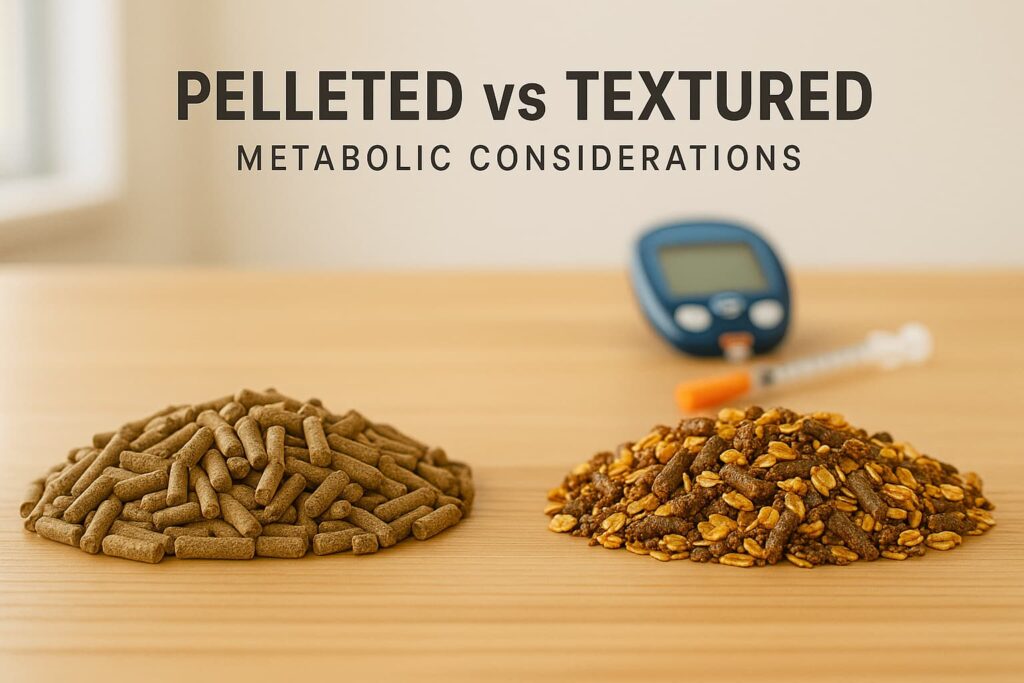
Pelleted feeds represent the gold standard for horses with metabolic conditions due to their precise manufacturing process and consistent nutritional delivery. The pelleting process involves grinding ingredients into uniform particles and compressing them under controlled conditions, creating feeds specifically designed to meet the stringent requirements of metabolically challenged horses.
Research demonstrates that pelleted feeds produce significantly lower post-meal blood glucose and insulin responses compared to extruded or textured feeds. This controlled metabolic response is crucial for horses with Equine Metabolic Syndrome (EMS), insulin resistance, or Cushing’s disease, where even small glucose spikes can trigger dangerous physiological cascades [3][18]. The manufacturing process preserves ingredient integrity while ensuring every pellet contains the exact same nutritional profile.
Superior Digestibility and Nutrient Availability
The pelleting process enhances digestibility through mechanical breakdown of fibrous components and improved protein availability. Studies show that pelleted feeds offer better nutrient utilization compared to whole grain alternatives, allowing horses to meet their nutritional needs with smaller volumes of feed [3]. This improved efficiency becomes particularly important for metabolic horses who often require caloric restriction while maintaining adequate vitamin and mineral intake.
The uniform particle size in pelleted feeds also promotes more thorough chewing and saliva production, supporting healthy digestion. Unlike whole grains that horses may bolt or inadequately chew, pelleted feeds encourage proper mastication, enhancing the digestive process from the very first bite.
Controlled NSC Formulation
Manufacturers of metabolic-specific pelleted feeds carefully control non-structural carbohydrate levels, typically maintaining NSC content below 10-12% [1][5][7]. Products like Tribute Kalm ‘N EZ Pellet and other specialized formulations replace traditional high-starch ingredients with safer alternatives like beet pulp, soy hulls, and stabilized rice bran [1][5]. These ingredient substitutions provide necessary calories through digestible fiber and fat rather than rapidly absorbed sugars and starches.
The precision of pelleted feed formulation extends beyond just NSC control to include optimal ratios of omega-3 fatty acids, antioxidants, and metabolic support nutrients. Many pelleted feeds designed for metabolic horses incorporate chromium, magnesium, and other trace minerals that support healthy insulin function and glucose metabolism [4][5][6].
Evaluating Textured Feeds for Metabolic Conditions
Textured feeds, commonly known as “sweet feeds,” present significant challenges for horses with metabolic conditions due to their traditional reliance on high-sugar ingredients and whole grains. However, the feed industry has evolved to address these concerns, creating specialized low-NSC textured options that can be appropriate in specific circumstances.
The Hidden Dangers of Traditional Formulations
Traditional textured feeds derive their appeal from molasses coating and whole grain inclusion, often containing oats, corn, and barley that can push NSC levels well above safe thresholds for metabolic horses [8][9][11][12]. The liquid molasses coating alone can contribute 45-65% sugar content, creating feeds with total NSC levels exceeding 20-25%. For horses with insulin resistance, these high-carbohydrate feeds can trigger glucose spikes that worsen metabolic dysfunction over time [11][12].
Dr. Sarah Williams, equine nutritionist at Kentucky Equine Research, explains: “Traditional sweet feeds were designed for performance horses with high energy demands. For metabolic horses, these formulations can be metabolically catastrophic, creating the exact glucose and insulin responses we’re trying to avoid.”
Selective Eating and Nutritional Imbalance
One of the most significant problems with textured feeds involves horses’ natural tendency to sort through their meals, preferentially consuming sweet grain components while leaving behind vitamin and mineral pellets [9]. This selective eating behavior creates a double problem: overconsumption of high-NSC ingredients combined with micronutrient deficiencies that can compound metabolic dysfunction.
Research shows that horses will consistently choose the sweetest, most palatable components of textured feeds first, essentially self-selecting a high-sugar diet [9][8]. For metabolic horses already struggling with glucose regulation, this sorting behavior eliminates owner control over NSC intake and can lead to unpredictable metabolic responses.
Modern Low-NSC Textured Alternatives
Recognizing the palatability advantages of textured feeds, some manufacturers now produce low-NSC textured options specifically formulated for metabolic horses. These specialized products replace molasses with safer binding agents and substitute high-starch grains with fibrous ingredients like beet pulp and wheat middlings [8][10][12]. Products in this category require careful label verification to ensure NSC levels remain below the 10-12% threshold [8][12].
However, even well-formulated low-NSC textured feeds carry inherent risks due to ingredient variability and sorting potential. The physical form makes it impossible to guarantee consistent NSC intake in every bite, creating management challenges for horses requiring precise metabolic control [10][12].
| Characteristic | Pelleted Feed | Textured Feed |
|---|---|---|
| NSC Content (Metabolic) | ✓ Usually lower, consistent [1][5] | ⚠ Often higher, verify carefully [9][11] |
| Palatability | ⚠ Moderate, can be soaked [3][9] | ✓ High, risk of sorting [9][8] |
| Nutrient Consistency | ✓ Very consistent [3][9][7] | ⚠ May vary, sorting risk [9] |
| Suitability | ✓ Recommended for metabolic horses [1][2][5][7] | ⚠ Only low-NSC options, check carefully [8][10][12] |
Critical Nutritional Considerations for Feed Selection
The most important factor when choosing feeds for horses with metabolic conditions is the non-structural carbohydrate (NSC) content, which represents the combination of simple sugars and starches that directly impact blood glucose levels. Understanding how to evaluate and compare NSC content across different feed types is essential for making informed decisions that protect your horse’s metabolic health.
Understanding NSC Thresholds and Safety Margins
Research has established that horses with metabolic conditions should consume feeds containing no more than 10-12% combined sugar and starch to minimize glucose and insulin responses [4][2][5][6][7]. This threshold provides a safety margin that accounts for individual variation in insulin sensitivity while still allowing for adequate nutrition. Some severely insulin-resistant horses may require even lower NSC levels, sometimes as low as 6-8%, particularly during acute laminitic episodes or initial dietary transitions [4][6].
The 10-12% threshold represents total NSC content, not individual sugar or starch values. Feed labels may list these components separately, requiring owners to calculate the combined total. This calculation becomes particularly important when comparing feeds, as some products may have low sugar but high starch content, or vice versa, still resulting in problematic total NSC levels.
Ingredient Analysis and Risk Assessment
Certain ingredients immediately signal concern for metabolic horses regardless of the feed form. Corn, oats, barley, and wheat top the list of problematic grains due to their high starch content, often contributing 60-70% starch by weight [8][11][12]. Molasses, whether cane or beet-based, should be avoided entirely, as should corn syrup and other added sugars that can rapidly elevate blood glucose levels [11][12].
Safer ingredient alternatives include beet pulp (without molasses), soy hulls, wheat middlings, stabilized rice bran, and vegetable oils. These components provide calories through digestible fiber and fat rather than simple carbohydrates, supporting steady energy release without glucose spikes [4][5][8]. Advanced formulations may also include functional ingredients like chromium, magnesium, and omega-3 fatty acids that support healthy metabolic function [5][6].
The Role of Forage in Metabolic Management
Both pelleted and textured concentrate feeds should be paired with appropriate forage sources to support optimal metabolic health [4][2]. High-quality hay with NSC content below 12% forms the foundation of any metabolic horse diet, with concentrates serving as nutrient-dense supplements rather than primary calorie sources. The forage-to-concentrate ratio often becomes more important than the specific concentrate type chosen, with most metabolic horses thriving on diets consisting of 80-90% forage by weight [4][2].
Expert Recommendations and Implementation Strategies
Making successful feed transitions for metabolic horses requires systematic planning, professional guidance, and careful monitoring to ensure both safety and nutritional adequacy. The process should begin with comprehensive veterinary evaluation and continue with gradual dietary changes that minimize stress while optimizing metabolic control.
Professional Consultation and Individual Assessment
Dr. Rebecca Thompson, board-certified equine internist specializing in metabolic disorders, emphasizes: “Every metabolic horse presents unique challenges requiring individualized nutrition plans. While pelleted feeds offer general advantages, the specific product choice should align with the horse’s current metabolic status, body condition, concurrent health issues, and management constraints.”
Professional guidance becomes essential when horses present with multiple conditions or complicated medical histories. A horse with both EMS and gastric ulcers requires different feeding strategies than one with EMS alone, potentially necessitating specialized feeds that address both conditions simultaneously [4][6]. The feeding schedule, portion sizes, supplement needs, and monitoring protocols all factor into the decision-making process beyond just feed selection [2][4].
Transition Protocols and Monitoring
Successful feed transitions require gradual changes over 7-14 days, mixing increasing proportions of new feed with decreasing amounts of the current diet. Blood glucose and insulin testing should occur 2-4 hours post-feeding during the first month of any feed change, with additional testing if clinical signs suggest metabolic instability [4][6]. Body weight and condition scoring provide longer-term indicators of nutritional adequacy and metabolic control.
Behavioral monitoring includes appetite assessment, feed consumption rates, and any signs of digestive upset. Horses that consume pelleted feeds too rapidly may benefit from feeding smaller, more frequent meals or adding safe fiber sources to slow consumption [3][9]. Conversely, horses that refuse pelleted feeds entirely may require gradual mixing with familiar feedstuffs or transition to specialized low-NSC textured alternatives [8][10].
Case Study Examples
A 14-year-old Quarter Horse mare with severe EMS showed remarkable improvement after switching from a traditional textured feed (24% NSC) to a specialized pelleted metabolic feed (8% NSC). Within eight weeks, her insulin levels dropped from 52 μIU/mL to 15 μIU/mL, her body condition score improved from 8.5 to 6, and her chronic foot soreness resolved completely.
Another case involved a 16-year-old Warmblood gelding with insulin resistance who initially refused pelleted feeds due to palatability concerns. His veterinarian recommended a low-NSC textured feed (9% NSC) that maintained metabolic safety while preserving appetite. Regular insulin monitoring confirmed stable metabolic parameters throughout the transition and ongoing management period.
Making the Optimal Choice for Your Horse
The decision between pelleted and textured feeds for horses with metabolic issues should prioritize NSC content and metabolic safety above all other considerations. While pelleted feeds offer inherent advantages in consistency and nutrient delivery, the most important factor remains selecting a feed formulation that maintains NSC levels below 10-12% while meeting your horse’s individual nutritional needs.
Success requires understanding that feed form matters less than feed formulation when managing metabolic conditions. A well-formulated pelleted feed with appropriate NSC levels will always outperform a poorly formulated textured feed, regardless of palatability or traditional feeding preferences. However, specialized low-NSC textured feeds can be appropriate for horses requiring enhanced palatability or specific nutritional profiles, provided owners maintain vigilant monitoring and accept the inherent risks of ingredient variability.
Regular veterinary monitoring, systematic label evaluation, and willingness to adjust feeding programs based on individual response will guide you toward optimal nutrition strategies. Remember that concentrate feed selection represents just one component of comprehensive metabolic horse management, working alongside forage quality, exercise programs, weight management, and medical treatment to support your horse’s long-term health and metabolic stability.
Pelleted Feed vs Textured Feed for Horses with Metabolic Issues FAQs

Are pelleted feeds always better than textured feeds for horses with EMS?
Pelleted feeds are generally preferred for horses with EMS due to lower NSC content, greater consistency, and prevention of selective eating, but some low-NSC textured feeds can be appropriate if NSC levels stay below 10-12% and sorting behavior is minimized [1][2][5][7].
What NSC level should I look for in feeds for horses with metabolic conditions?
Look for feeds containing less than 10-12% combined non-structural carbohydrates (sugar and starch), though severely insulin-resistant horses may require even lower levels of 6-8% during acute management phases [4][2][5][6][7].
Why do horses sort textured feeds and how does this affect metabolic horses?
Horses naturally select the sweetest, most palatable components of textured feeds while leaving behind vitamin and mineral pellets, creating both overconsumption of high-NSC ingredients and micronutrient deficiencies that can worsen metabolic dysfunction [9][8].
Can I soak pelleted feeds for my senior horse with metabolic issues?
Yes, pelleted feeds can be easily soaked to create a mash, which benefits senior horses or those with dental issues while maintaining the low NSC content essential for metabolic management [3][9].
Are there specific feed brands recommended for horses with metabolic conditions?
Specialized feeds like Tribute Kalm ‘N EZ Pellet, Triple Crown Low Starch, and other metabolic-specific formulations are designed with NSC levels below 10-12%, but always verify current nutritional analysis as formulations can change [1][5][7].
Pelleted Feed vs Textured Feed for Horses with Metabolic Issues Citations
[1] https://tributeequinenutrition.com/products/kalm-n-ez-pellet
[2] https://www.masterfeeds.com/equine_metabolic_support/
[3] https://ker.com/equinews/how-do-pelleted-horse-feeds-stack-up/
[5] https://www.petmd.com/horse/nutrition/feeding-metabolic-horses
[6] https://nutrenaworld.com/education/horses/metabolic/
[7] https://www.triplecrownfeed.com/feeds/
[8] https://tributeequinenutrition.com/products/kalm-n-ez-textured
[9] https://tributeequinenutrition.com/blogs/news/horse-feeds-pelleted-versus-textured
[10] https://www.platinumperformance.com/articles/feeding-metabolic-horses.html
[11] https://thehorse.com/1123896/hide-and-sweet-exposing-the-sugar-in-a-metabolic-horses-diet/
[12] https://kentfeeds.com/resources/horse/extruded-horse-feed/horse-feed-forms-and-benefits/
[13] https://madbarn.com/feed-types/textured/
[14] https://proelitehorsefeed.com/our-solutions/metabolic-conditions/
[15] https://madbarn.com/feed-types/metabolic/
[16] https://madbarn.ca/feeds/mature-horse-textured-feed-lifeline/
[17] https://thehorse.com/160824/pelleted-vs-textured-horse-feed/
[19] https://www.mccauleysfeeds.com/feeds/
[20] https://seminolefeed.com/product-category/feeds/metabolic/





Leave a Reply