
Key Takeaways
- Horse supplement shelf life is severely impacted by oxygen, moisture, heat, and light exposure after opening containers
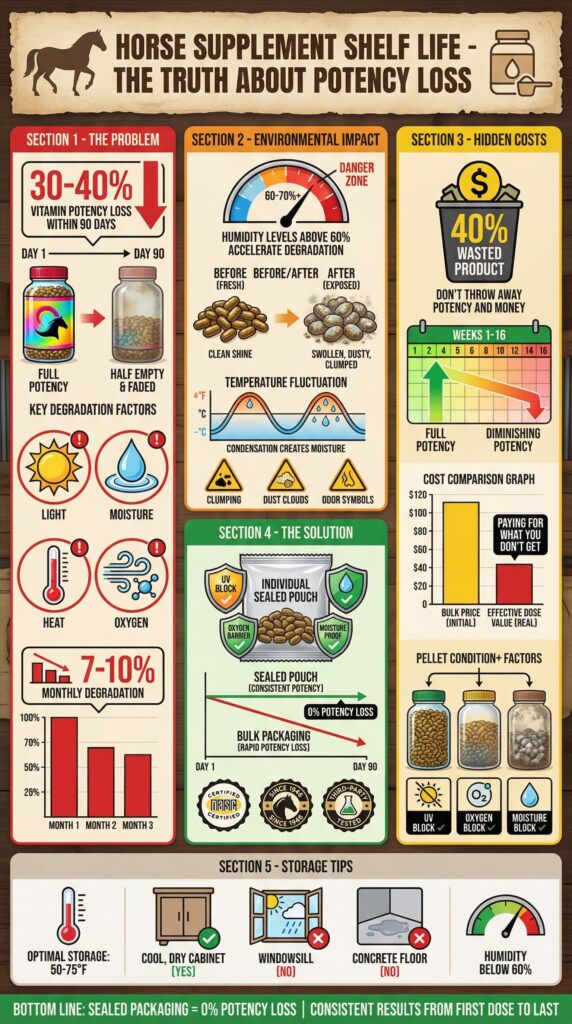
- Traditional supplement pellets lose up to 40% of vitamin potency within 90 days once buckets are opened
- Commercial feeds with added fats or molasses have the shortest shelf life at just 90 days from manufacture
- Individually sealed packaging like Formula 707’s Fresh Packs protects each dose from degradation until feeding time
- NASC-certified manufacturing and third-party testing ensure consistent potency throughout a supplement’s intended shelf life
Horse supplement shelf life isn’t just about expiration dates—it’s about how quickly active ingredients degrade once you open that bucket. Traditional supplement pellets stored in bulk containers can lose 30-40% of their vitamin potency within three months of opening, even when stored properly. This degradation happens because oxygen, moisture, heat, and light steadily break down sensitive nutrients every single time you scoop out your horse’s daily serving.
Why Horse Supplement Shelf Life Matters for Your Horse’s Health
Your horse’s supplement pellets don’t just slowly lose effectiveness over months—the degradation begins the moment you break the seal on that container. Understanding why horse supplement shelf life is limited helps explain why storage method and packaging design matter just as much as supplement quality.
Every time you open a pellet bucket to measure your horse’s daily serving, you expose the entire container’s contents to four major degradation factors. Oxygen immediately begins oxidizing fat-soluble vitamins like E and A, while atmospheric moisture increases pellet water content and accelerates microbial growth. Temperature fluctuations in the barn cause pellets to expand and contract, creating microscopic cracks that allow even more air and moisture penetration.
The Science Behind Vitamin Degradation
Research on hay storage demonstrates how vulnerable vitamins are to environmental conditions. Studies show that hay loses 54-73% of its vitamin E content within three months of storage at typical barn temperatures. While supplement pellets offer better initial protection than loose forage, vitamin E and other fat-soluble vitamins still degrade significantly once containers are opened.
Commercial feeds containing added fats or molasses have an even shorter safe storage time—as little as 90 days from the date of manufacture. The combination of moisture exposure, heat, and oxygen creates perfect conditions for nutrient degradation. Research on hay vitamin content shows degradation rates of 7-10% per month when exposed to heat, oxygen, and light—similar environmental challenges that affect supplement pellets once containers are opened.
How Moisture and Temperature Affect Shelf Life
Humidity poses a particular threat to maintaining optimal horse supplement shelf life. When pellets absorb atmospheric moisture, they begin to swell and lose their glossy surface texture. This physical change signals that internal degradation has begun. Pellets stored at high relative humidity (above 60-70%) can develop microbial growth that further reduces nutritional value.
Temperature swings common in barn environments accelerate these problems. A pellet container that’s warm during the day and cool at night experiences condensation cycles that introduce moisture deep into the product. Even properly sealed inner bags can’t completely prevent this when the outer container is repeatedly opened and closed.
How Much Potency Do Traditional Pellets Actually Lose?
The timeline for nutrient degradation in horse supplements depends on several factors, but research provides clear benchmarks. Understanding these losses helps explain why buying supplements in bulk isn’t always the cost-effective choice it appears to be.
Within the first 30-60 days after opening, supplements typically maintain reasonable potency under proper storage conditions. However, vitamin levels can begin declining at measurable rates once oxygen exposure begins, with the steepest drops occurring in the first few weeks after breaking the seal. By three months, substantial degradation has occurred in most opened containers.
These losses aren’t hypothetical. Research on omega-3 supplements published in Food Science & Nutrition (2023) demonstrated that individually packaged servings showed significantly better oxidative stability than products in opened bottles exposed to repeated oxygen contact. The study simulated average storage conditions with 77°F temperature and 60% relative humidity—conditions found in most barns year-round.
The Bulk Buying Trap
Many horse owners purchase large tubs of pellets thinking they’re getting better value. However, if you’re feeding a single horse, a 40-pound bucket that lasts four months means your horse receives dramatically different nutrient levels between the first week and the final week. B vitamins like biotin, crucial for hoof quality, degrade over time with exposure to heat and moisture.
This creates an inconsistent supplementation pattern. Your horse might show improvement in hoof quality or coat shine during the first month, then plateau or even regress as the supplement potency declines. Horse owners often blame the supplement or their horse’s response, when the real culprit is nutrient degradation during storage.
What Makes Formula 707 Different for Extending Shelf Life
Formula 707’s parent company, John Ewing Company, has manufactured animal supplements in their own Colorado facility since 1946, giving them nearly 80 years of experience perfecting pellet stability and quality control. Their approach differs from traditional bulk pellet manufacturers in three critical ways.
In-House Manufacturing Control
Unlike supplement companies that outsource production, Formula 707 owns and operates their manufacturing facility in LaSalle, Colorado. This allows them to oversee every step of the pelleting process, from ingredient sourcing through final packaging. The company voluntarily adheres to the strict good manufacturing practices (GMP) set by the National Animal Supplement Council (NASC), which includes regular facility audits and quality testing. You can learn more about their commitment to quality in our article about Formula 707’s NASC certification process.
The pelleting process itself matters enormously for final product stability. Formula 707 controls temperatures during pellet formation to preserve heat-sensitive vitamins and enzymes that can denature at even slightly elevated temperatures. The company uses alfalfa-based pellets that provide natural binding without requiring excessive heat or pressure during manufacturing.
Fresh Pack Sealed Delivery System
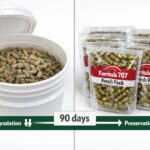
The cornerstone of Formula 707’s solution to limited horse supplement shelf life is their Fresh Pack system. Instead of selling supplements in large buckets that expose all contents to air every time you scoop out a serving, Fresh Packs contain a single day’s dose in an individually sealed pouch.
This packaging approach prevents the cascade of degradation that begins when buckets are opened. Each pellet remains sealed against oxygen, moisture, and light until the moment you tear open that day’s pack. Your horse receives the same vitamin potency on day 90 that they would have received on day one.
Independent testing confirms that sealed individual servings maintain nutrient levels significantly better than bulk containers. The protection isn’t just against oxygen—the packaging also blocks nearly 100% of damaging UV rays that can break down vitamins even through opaque plastic buckets.
Third-Party Potency Testing
Formula 707 backs their quality claims with comprehensive third-party testing on products like their Hemp Pellets, confirming phytocannabinoid potency and guaranteeing zero microcontaminants and residual solvents. This external verification provides assurance that what’s listed on the label matches what’s actually in each Fresh Pack throughout the product’s entire shelf life.
The NASC Quality Seal visible on Formula 707 products signals adherence to rigorous standards for manufacturing, ingredient sourcing, and labeling accuracy. These audited facilities must meet requirements that go beyond basic FDA regulations for animal supplements.
The Real Cost of Degraded Supplements
When you calculate the true cost of supplements, you need to factor in what your horse actually receives—not just what you paid per pound. Understanding horse supplement shelf life reveals that a cheaper bulk supplement that loses 40% potency over three months may cost you more per effective dose than a premium product with protected packaging.
Hidden Waste in Your Barn
Consider a common scenario: You buy a 10-pound bucket of hoof supplement for $45, getting what appears to be a 120-day supply. If you’re feeding from that bucket for four months, your horse receives full-potency supplement for the first 4-6 weeks, then diminishing returns as weeks progress. By month three, when your horse needs that biotin most for spring hoof growth, they’re getting perhaps 60-65% of the original formulation.
You think you’re saving money by buying bulk, but you’re actually throwing away 30-40% of what you purchased. That $45 bucket effectively becomes a $60 supplement when you account for degraded product your horse can’t use.
Inconsistent Results
Veterinarians and equine nutritionists emphasize that consistent daily supplementation produces the best results for conditions like laminitis, metabolic syndrome, and hoof quality improvement. When pellet potency varies from week to week due to shortened shelf life, you can’t provide that consistency.
Your horse’s metabolism doesn’t adjust its needs based on how long your supplement bucket has been open. A horse recovering from laminitis needs the same amount of biotin, zinc, and methionine on day 80 as they did on day 10. Degraded pellets can’t deliver that reliability.
How to Store Supplements to Maximize Shelf Life
Even with individually sealed packs, proper storage practices protect your investment and ensure your horse receives optimal nutrition. These guidelines apply whether you use Formula 707 Fresh Packs or traditional bulk supplements.
Temperature Control
Store all equine supplements in cool, dry locations away from direct heat sources. Ideal storage temperature ranges between 50-75°F with relative humidity below 60%. Avoid placing supplement containers near barn windows, heating vents, or areas exposed to temperature extremes.
If your barn experiences significant temperature swings, consider storing supplements in your home’s climate-controlled environment and bringing out one week’s worth at a time. This minimizes exposure to the condensation cycles that accelerate degradation and shorten shelf life.
Light Protection
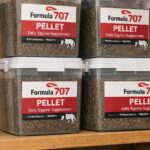
UV radiation from sunlight breaks down vitamins even through opaque containers. Store supplements in enclosed cabinets or feed rooms rather than open shelving. If using the Formula 707 storage system with their plastic drawer and blue insert, you benefit from built-in UV blocking that prevents light-related degradation.
Moisture Prevention
Humidity is particularly destructive to horse supplement shelf life. Use airtight containers with secure lids for bulk supplements, and always reseal inner plastic bags completely after each use. Never store pellets directly on concrete floors where they can absorb ground moisture. Metal or hard plastic containers with tight-fitting lids work better than paper bags or wooden bins.
Watch for warning signs that moisture has compromised your pellets: loss of glossy appearance, excessive dust or powder accumulation, clumping, or off odors. These indicators mean the product has degraded beyond acceptable quality and should be replaced.
Making the Switch: What Horse Owners Report
Horse owners who transition from bulk pellets to individually packaged systems like Formula 707 Fresh Packs consistently report three main benefits: improved consistency in results, reduced waste, and greater convenience.
The convenience factor shouldn’t be underestimated. Barn staff and horse owners managing multiple horses appreciate knowing each animal receives exactly the right dose without measuring. There’s no risk of under-serving or over-serving, and no supplement dust exposure during scooping.
For horses being managed for metabolic conditions like EMS or insulin resistance, this precise dosing matters enormously. When you’re carefully controlling every component of your horse’s diet, guessing at supplement amounts or dealing with degraded potency due to limited shelf life introduces unwanted variables into your management protocol.
Conclusion
The supplement pellets in your barn right now are probably less effective than when you first opened the container. Understanding horse supplement shelf life reveals that traditional bulk packaging exposes pellets to oxygen, moisture, heat, and light every single time you scoop out a serving, causing vitamin degradation that can reach 40% within three months.
Formula 707’s Fresh Pack system solves this problem by sealing each daily dose individually until the moment you feed it. Combined with NASC-certified manufacturing standards and third-party quality testing, this approach ensures your horse receives consistent, full-potency supplementation from the first day through the last.
Investing in properly packaged supplements isn’t just about buying a premium product—it’s about actually receiving the nutritional value you’re paying for throughout the product’s entire shelf life. When managing horses with metabolic conditions, hoof problems, or special nutritional needs, that consistency can make the difference between progress and frustration.
Read more at our Formula 707 MetaStable product review
Horse Supplement Shelf Life FAQs
How long do horse supplement pellets last after opening?
Horse supplement pellets maintain optimal potency for 30-60 days after opening, depending on storage conditions. Horse supplement shelf life is significantly reduced once buckets are opened, with pellets typically losing 10-15% of vitamin content within the first month and up to 40% by three months due to oxygen exposure, moisture, and temperature fluctuations. For best results, purchase amounts you can use within 30 days or choose individually sealed servings that protect each dose until feeding.
Can I tell if my horse supplements have gone bad?
Yes, degraded horse supplements show visible signs including loss of glossy appearance, excessive dust or powder, clumping, off odors, or color changes. Physical changes indicate that moisture has penetrated the pellets and degradation has begun, shortening the effective shelf life. Your horse refusing to eat supplements that they previously accepted can also signal rancidity in fat-based ingredients. When you notice these warning signs, replace the product rather than continuing to feed degraded supplements.
Do pellets degrade faster than powder supplements?
Pellets and powders degrade at similar rates when exposed to oxygen, moisture, and heat, but pellets may show less obvious signs of degradation initially. Powder supplements can demonstrate degradation through color fading or odor changes more quickly, while pellets maintain their shape even as internal nutrient levels decline. Both forms benefit equally from individual packaging that seals each serving against environmental exposure to maximize shelf life.
Why do Formula 707 Fresh Packs cost more than bulk pellets?
Formula 707 Fresh Packs may have a higher upfront cost, but they deliver better value per effective dose because each serving maintains full potency throughout the product’s shelf life. Bulk pellets that lose 30-40% potency over three months effectively waste that percentage of your purchase. Fresh Packs eliminate this hidden cost by protecting nutrients until consumption, meaning your horse receives consistent supplementation without the degradation losses that reduce bulk supplement effectiveness.
Should I refrigerate my horse supplements?
Refrigeration isn’t necessary for most horse supplements and can actually introduce moisture problems when cold containers are brought into warm barn environments, potentially shortening shelf life. Instead, store supplements in cool, dry locations at 50-75°F with humidity below 60%. Individually sealed Fresh Packs protect against degradation without refrigeration, while bulk supplements should be kept in airtight containers away from heat, light, and moisture sources for optimal preservation and maximum shelf life.
Horse Supplement Shelf Life Citations
- Pelleting Equipment – Making.com
- Poultry Feed Pellets Processing Technology
- Nutrition Loss in Stored Hay – The Horse
- Do Feeds and Supplements Go Bad? | Dr. K’s Horse Sense
- Q&A: Hay Nutrient Loss – Kentucky Equine Research
- Horse Feed Storage and Preservation – The Horse
- Effect of Packaging and Encapsulation on the Oxidative and Sensory Stability of Omega‐3 Supplements – Food Science & Nutrition
- Keep Your Horse in Good Health with Continuous Supplementation – SmartPak
- Home – Formula 707®
- Calming Pellets – Formula 707®
- Form Factor: Powder, Pellet, Liquid, or Paste Supplements – SmartPak
- Calming Fresh Packs – Formula 707®
- Hemp Pellets – Formula 707®
- Shelf Life of Vitamins and Supplements for Horses – SmartPak
- Vitamins for Horses: Requirements, Roles, Deficiency & Excess | Mad Barn
- Q&A: Grain Storage – Kentucky Equine Research




Leave a Reply