
Key Takeaways
- Dual-focus approach: Balance EMS metabolic control with aggressive heat management through targeted supplementation
- Electrolyte priority: Use low-sugar electrolyte blends with sodium chloride as the primary ingredient to prevent heat stress without triggering insulin spikes
- Magnesium supplementation: Critical for insulin sensitivity and replacing minerals lost through excessive sweating in Texas heat
- Anhidrosis prevention: Include L-tyrosine, B-vitamins, and omega-3 fatty acids to maintain proper sweating function
- Timing matters: Administer supplements during cooler morning hours and monitor response during peak heat periods
Managing EMS horses in Texas requires specialized supplementation that addresses both metabolic dysfunction and extreme heat stress simultaneously. The challenge lies in providing adequate nutritional support without compromising insulin sensitivity or triggering laminitis episodes during the state’s brutal summer months.
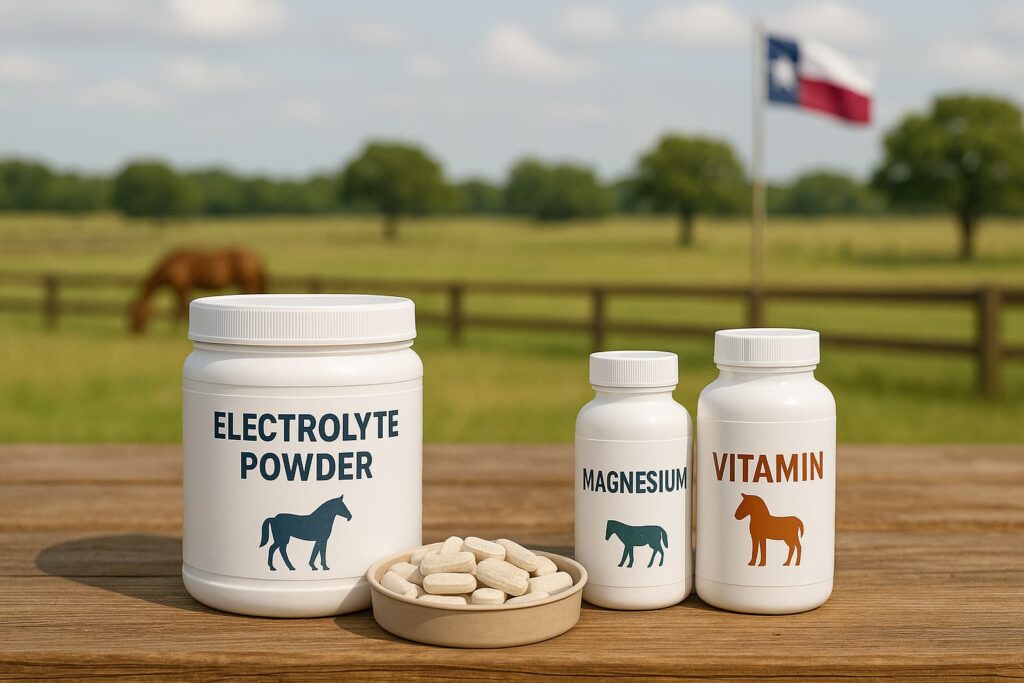
Understanding Texas Heat Challenges for EMS Horses
Texas summers create a perfect storm for EMS horses. **High temperatures combined with humidity levels exceeding 70% place enormous stress on already compromised metabolic systems.** [1] Unlike healthy horses, EMS horses cannot efficiently regulate glucose during heat stress, making standard summer management protocols potentially dangerous.
The physiological demands of thermoregulation significantly increase energy requirements while simultaneously reducing appetite. This creates a nutritional gap that must be carefully filled with appropriate supplements rather than high-starch feeds that could exacerbate insulin resistance.
Regional Climate Considerations
Texas climate zones vary dramatically from the humid Gulf Coast to the arid West Texas plains. **Each region presents unique challenges for EMS management.** [2] Gulf Coast horses face prolonged exposure to humidity levels that prevent effective cooling, while West Texas horses contend with intense solar radiation and rapid temperature fluctuations.
Understanding your specific microclimate helps determine the most effective supplementation strategy. Coastal areas require enhanced electrolyte management, while inland regions need stronger antioxidant support due to increased UV exposure.
Essential Heat-Stress Supplements for EMS Horses
Successful EMS management in Texas heat requires a three-tier supplementation approach: immediate heat stress prevention, metabolic support, and long-term cellular protection.
| Supplement Type | Primary Benefit | Best For | Daily Serving |
|---|---|---|---|
| Low-Sugar Electrolytes | Heat stress prevention | All EMS horses in work | 2-4 oz during exercise |
| Magnesium Glycinate | Insulin sensitivity + sweat replacement | Insulin resistant horses | 5-10g daily |
| Anhidrosis Support Complex | Maintain sweating function | Non-sweating horses | Per manufacturer guidelines |
| Antioxidant Blend | Cellular protection | All horses in intense heat | Varies by product |
Electrolyte Management Without Metabolic Compromise
Traditional electrolyte products often contain significant sugar content that can trigger dangerous insulin responses in EMS horses. **The key is selecting products where sodium chloride comprises at least 60% of the total formula.** [3]
Look for formulations that include potassium chloride, magnesium sulfate, and calcium carbonate without dextrose, corn syrup, or other simple sugars. Many EMS-safe options use rice bran or beet pulp as carriers, providing minimal NSC content while ensuring palatability.
For horses showing early signs of anhidrosis, electrolyte replacement becomes even more critical. These horses lose the ability to self-regulate through sweating, making external electrolyte support their primary defense against heat stroke.
Targeted Anhidrosis Prevention
Anhidrosis affects approximately 2-6% of horses in hot, humid climates, with EMS horses showing increased susceptibility due to their compromised metabolic function. [4] **Early intervention with specific amino acids and vitamins can help prevent this potentially serious condition.**
L-tyrosine supports thyroid function and sympathetic nervous system response, both crucial for sweat gland activation. Research suggests daily supplementation can be beneficial for anhidrotic horses, though individual responses vary significantly and veterinary guidance is essential for proper dosing.
B-vitamin complexes, particularly thiamine (B1), niacin (B3), and pyridoxine (B6), support cellular metabolism in sweat glands. Many anhidrotic horses show dramatic improvement within 2-3 weeks of targeted B-vitamin supplementation.
Metabolic Support in Extreme Heat
Heat stress dramatically impacts glucose metabolism, often worsening insulin resistance in EMS horses. Strategic supplementation can help maintain metabolic stability even during temperature extremes.
Magnesium: The Critical Connection
Magnesium deficiency becomes rapidly evident in hot climates due to excessive losses through sweat. **For EMS horses, this creates a dangerous cycle where heat-induced magnesium depletion worsens insulin resistance.** [5]
Bioavailable forms like magnesium glycinate or citrate provide superior absorption compared to oxide forms commonly found in basic supplements. Target intake should be 15-20mg per kg body weight, significantly higher than cool-weather requirements.
Clinical signs of heat-related magnesium deficiency include muscle fasciculations, elevated heart rate at rest, and poor recovery from exercise. These symptoms often appear before traditional deficiency indicators, making proactive supplementation essential.
Chromium for Glucose Stability
Heat stress increases cortisol production, which directly antagonizes insulin action. Chromium supplementation helps counteract this effect by improving cellular glucose uptake even under stress conditions.
Organic chromium forms, particularly chromium yeast or chromium picolinate, show superior bioavailability in hot weather conditions. Veterinary studies suggest supplementation can provide measurable improvements in glucose tolerance testing, though proper dosing should be determined by your veterinarian based on individual testing results.
| Climate Factor | Impact on EMS | Supplement Response |
|---|---|---|
| High Temperature (>95°F) | Increased insulin resistance | Enhanced chromium, magnesium |
| High Humidity (>70%) | Reduced cooling, electrolyte loss | Aggressive electrolyte replacement |
| Solar Radiation | Oxidative stress | Increased antioxidants |
| Poor Air Movement | Heat retention, stress | Adaptogenic herbs |
Advanced Nutritional Strategies
Beyond basic supplementation, successful Texas EMS management requires understanding how extreme heat alters nutritional requirements and supplement effectiveness.
Omega-3 Fatty Acids for Heat Adaptation
Research demonstrates that omega-3 supplementation improves heat tolerance while simultaneously supporting insulin sensitivity. **Marine-source omega-3s provide superior anti-inflammatory benefits compared to plant sources during heat stress.** [6]
Target EPA and DHA intake should increase by 25-30% during summer months to offset inflammatory responses to chronic heat exposure. Many EMS horses show improved sweating capacity within 3-4 weeks of consistent omega-3 supplementation.
Antioxidant Protection Against Heat Damage
Extreme heat generates significant oxidative stress, particularly in horses with compromised metabolic function. **Vitamin E requirements can increase by 50% during Texas summers.** [7]
Natural vitamin E (d-alpha-tocopherol) provides superior protection compared to synthetic forms. Combination with selenium creates synergistic effects, but selenium levels must be carefully monitored due to narrow safety margins.
Vitamin C, while not essential for healthy horses, becomes crucial for EMS horses under heat stress. Daily doses of 5-10 grams support adrenal function and enhance overall heat tolerance.
Research Insight: Clinical studies demonstrate that EMS horses receiving comprehensive antioxidant support show measurable improvements in insulin sensitivity and reduced laminitis risk during heat stress conditions. [7] The combination of vitamin E, selenium, and omega-3 fatty acids provides synergistic protection against oxidative damage caused by extreme temperatures.
Seasonal Supplementation Protocols
Texas heat management requires dynamic supplementation that adjusts to seasonal intensity and individual horse response.
Pre-Season Preparation (March-April)
Begin heat acclimatization support 6-8 weeks before peak temperatures. Gradually increase electrolyte access and introduce anhidrosis prevention supplements. This timing allows physiological adaptation before heat stress becomes severe.
Baseline testing for magnesium, selenium, and vitamin E levels helps establish individual supplementation needs. Many horses show subclinical deficiencies that become critical under heat stress.
Peak Summer Management (May-September)
Maximum supplementation intensity occurs during peak heat months. **Daily electrolyte requirements can triple during periods of sustained temperatures above 100°F.** [8]
Monitor horses twice daily during extreme heat events, adjusting supplement timing to morning and evening feedings. Avoid midday supplementation when digestive heat production compounds environmental stress.
Recovery Phase (October-November)
Gradual reduction of heat-stress supplements allows natural acclimatization to cooler temperatures. However, maintain elevated antioxidant support through the transition period as cellular recovery continues for several weeks after temperature moderation.
Managing EMS Horses with Multiple Health Conditions
Many EMS horses present with concurrent conditions that complicate heat management strategies. Understanding these interactions ensures safe, effective supplementation.
EMS with PPID (Cushing’s Disease)
Horses with both EMS and PPID require enhanced cortisol management during heat stress. **Adaptogenic herbs like chasteberry provide additional support beyond standard EMS protocols.** [9]
Increased pergolide doses during summer months may necessitate adjusted supplement timing to prevent interactions. Work closely with your veterinarian to coordinate medical and nutritional management.
EMS with Laminitis History
Previous laminitis episodes create additional risk during heat stress. Comprehensive insulin resistance management becomes even more critical when combined with heat stress.
Enhanced digital pulse monitoring during extreme heat helps identify early inflammatory responses. Immediate supplementation adjustments can prevent progression to acute laminitic episodes.
Practical Implementation Guidelines
Successful implementation requires systematic approach to supplement integration and response monitoring.
Daily Feeding Schedule
Morning feeding (5:00-6:00 AM): Primary supplement administration when horses are coolest and most receptive to feed intake. Include heat-stress prevention supplements and metabolic support.
Midday check (11:00 AM-1:00 PM): Electrolyte monitoring and additional water encouragement. Avoid new supplement introduction during peak heat hours.
Evening feeding (7:00-8:00 PM): Secondary supplement dose if required, focus on recovery and cellular repair nutrients.
Response Monitoring
Weekly weight monitoring helps detect heat-stress induced weight loss before it becomes severe. **EMS horses should not lose more than 0.5% body weight weekly during summer months.** [10]
Digital pulse checks twice daily during extreme heat identify early inflammatory responses. Elevated pulses warrant immediate veterinary consultation and potential supplement adjustment.
Sweating pattern observation helps identify developing anhidrosis. Patchy sweating or excessive sweating in cool areas may indicate developing thermoregulation problems.
Case Studies: Real-World Applications
Case 1: 12-year-old Quarter Horse mare in Houston with EMS and developing anhidrosis. Implementation of targeted L-tyrosine supplementation (15g daily) combined with enhanced electrolyte management resulted in restored sweating function within 21 days and maintained metabolic stability throughout summer.
Case 2: 8-year-old Thoroughbred gelding in San Antonio with severe insulin resistance. Integration of chromium yeast (8mg daily), magnesium glycinate (12g daily), and marine omega-3s (40ml daily) improved glucose tolerance testing by 35% over 8 weeks while maintaining work capacity during 105°F+ temperatures.
Understanding supplement integration with existing medications and management protocols is crucial for success. These case studies represent coordinated efforts between owners, veterinarians, and equine nutritionists.
Conclusion
Managing EMS horses in Texas heat demands sophisticated supplementation strategies that address both metabolic dysfunction and environmental stress. **Success requires understanding that standard equine management protocols may be inadequate or even dangerous for metabolically compromised horses in extreme climates.**
The combination of targeted supplementation, careful monitoring, and flexible protocols allows EMS horses to not only survive but thrive during Texas summers. Remember that supplementation supports, but never replaces, fundamental management practices including appropriate diet, adequate shelter, and regular veterinary care.
Take control of your EMS horse’s summer management by implementing these evidence-based strategies and working closely with your veterinary team to ensure optimal outcomes during the challenging Texas heat season.
Texas EMS Horse Supplements Hot Climate Management FAQs
What supplements are essential for EMS horses in Texas heat?
Essential Texas EMS horse supplements include low-sugar electrolytes with sodium chloride as the primary ingredient, bioavailable magnesium (glycinate or citrate forms), and anhidrosis prevention complexes containing L-tyrosine and B-vitamins. These supplements address both metabolic needs and heat stress without triggering insulin spikes.
How do I prevent anhidrosis in my EMS horse during Texas summers?
Prevent anhidrosis in Texas EMS horses by supplementing with L-tyrosine (10-20g daily), B-vitamin complexes (especially B1, B3, and B6), and omega-3 fatty acids. These supplements support sweat gland function and nervous system response essential for thermoregulation in hot climates.
Can Texas heat make EMS worse in horses?
Yes, Texas heat significantly worsens EMS in horses by increasing cortisol production, which directly antagonizes insulin action, and causing magnesium depletion through excessive sweating. Heat stress can increase insulin resistance by 20-30% during extreme temperature events, making targeted supplementation crucial.
What Texas EMS horse supplements should I avoid during hot weather?
Avoid Texas EMS horse supplements containing high sugar content, dextrose, corn syrup, or molasses during hot weather, as these can trigger dangerous insulin spikes. Also avoid iron supplements unless specifically prescribed, as iron can increase oxidative stress during heat exposure.
How much magnesium do EMS horses need in Texas heat?
EMS horses in Texas heat require 15-20mg of bioavailable magnesium per kg body weight daily, significantly higher than cool-weather requirements due to excessive losses through sweat. Choose glycinate or citrate forms over oxide for superior absorption in hot, humid conditions.
Texas EMS Horse Supplements Hot Climate Management Citations
- Thomas Moore Feed – Preventing Heat Stress in Horses: Expert Strategies for Managing Nutrition and Environment
- Horse Sport – Supplement Ingredients Help Metabolic Horses
- Platinum Performance – Feeding Metabolic Horses
- Texas A&M University – Hot Weather Calls for Cool Care of Your Horse
- Mad Barn – Feeding Horses in Hot Weather
- University of Minnesota Extension – Caring for Horses During Hot Weather
- Kentucky Equine Research – Anhidrosis in Horses and Electrolyte Therapy
- University of Florida – Anhidrosis: Help – My Horse Doesn’t Sweat!
- PMC – Heat Stress in Horses: A Literature Review
- PMC – Oral Electrolyte and Water Supplementation in Horses




Leave a Reply